


How Will a Criminal Record Affect Finding a Job in Illinois?
 10/11/2026
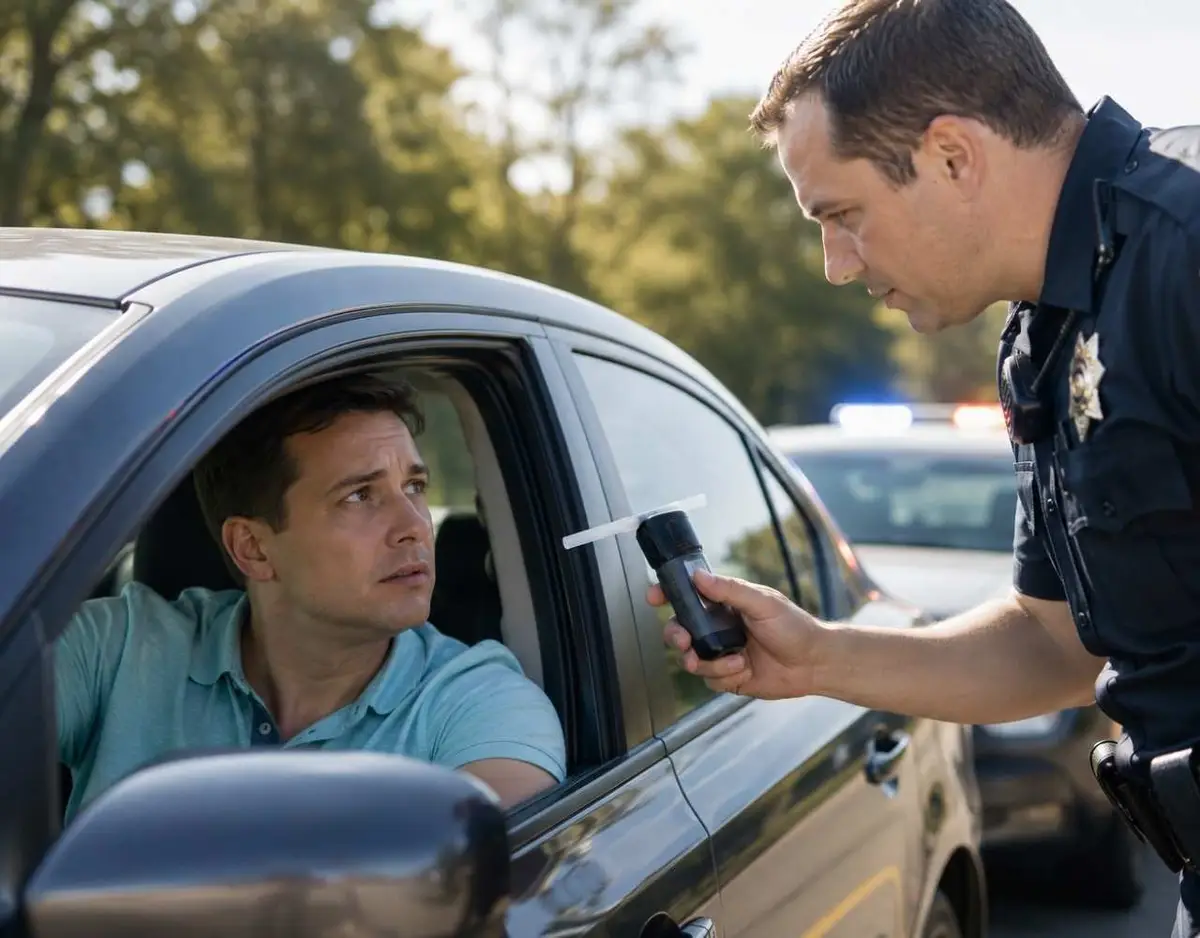
If you were just pulled over, or you already refused a breath test and don’t know what happens next, you need clear answers right now, not a legal lecture. Yes, you can refuse a breathalyzer in Illinois, but the refusal triggers an automatic license suspension under the state’s implied consent law, separate from any DUI charge. If you are facing this today, call us at (312) 800-1626 for a Free Case Review before the clock runs out on your case.
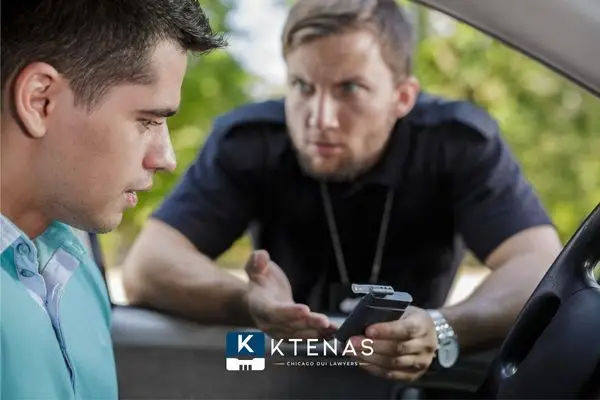
Under Illinois’ Implied Consent Law (625 ILCS 5/11-501.1)(opens in a new tab), every licensed driver already agreed to submit to chemical testing, meaning a breath test, blood test, or urine test, the moment they got behind the wheel.
You still have the physical ability to refuse the test in the moment. But that refusal carries an automatic penalty called a statutory summary suspension, and for a first offense, refusing costs you twice as long behind the wheel as failing the test would.
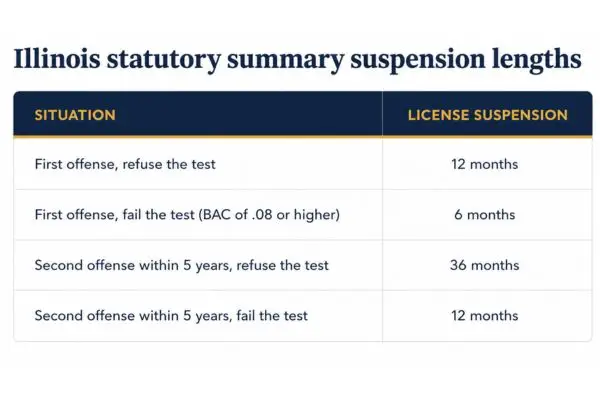
These numbers come straight from the Illinois Secretary of State’s own driver services guidance, and they apply whether or not you are ever convicted of DUI.
Illinois does not ask for your permission at the roadside. By holding an Illinois driver’s license, you already consented to chemical testing if a law enforcement officer develops probable cause to believe you were driving under the influence. That is the implied consent framework behind nearly every DUI stop in the state.
Probable cause usually builds from a combination of small signals:
Once an officer believes they have enough, they can arrest you and request a breath test using a portable breathalyzer or station-house testing equipment.
You can also decline field sobriety testing itself. Field sobriety tests are voluntary. Only the chemical test refusal, the breath, blood, or urine test after arrest, triggers the automatic suspension.
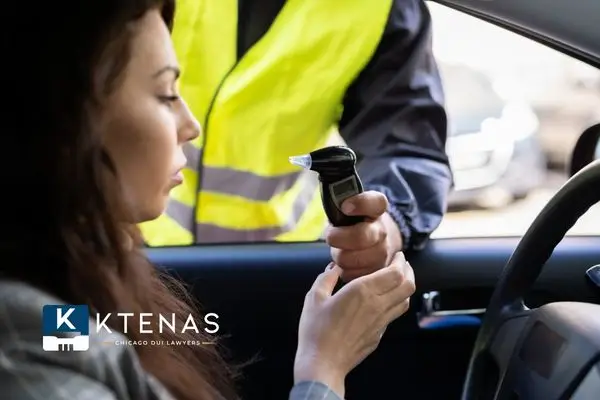
If you refuse the breathalyzer test after a lawful arrest, the officer takes your physical license and hands you a Notice of Statutory Summary Suspension. That notice does not take effect immediately.
Your deadlines after a refusal
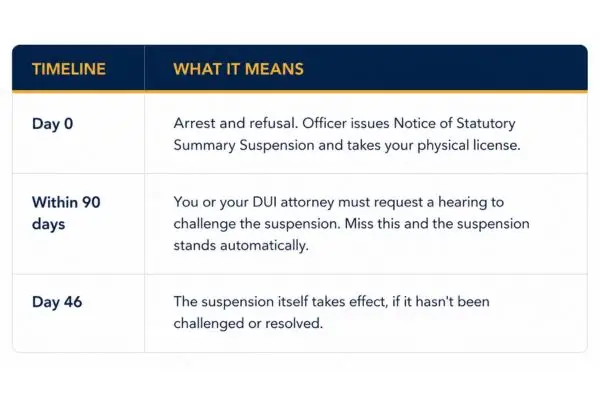
That window between the notice and day 46 is what your attorney uses to challenge the suspension before it ever takes effect. Miss the 90-day hearing deadline, and the suspension simply stands, whether or not your underlying DUI case ever goes anywhere.
This is the part people get wrong most often. Refusing a chemical test does not stop DUI arrests, and it does not stop driving under the influence charges from moving forward. Prosecutors do not need a BAC number to bring a case.
What prosecutors can use instead of a breath test result:
A first-time DUI in Illinois is typically a Class A misdemeanor, carrying up to 364 days in county jail and fines up to $2,500. Aggravating factors, like a prior conviction, an injury crash, or a minor passenger in the car, can push the charge into felony territory.
Refusing the test removes one piece of evidence from the state’s file. It does not remove the case.
If you hold a CDL, refusing a breath test is a career decision, not just a license decision.
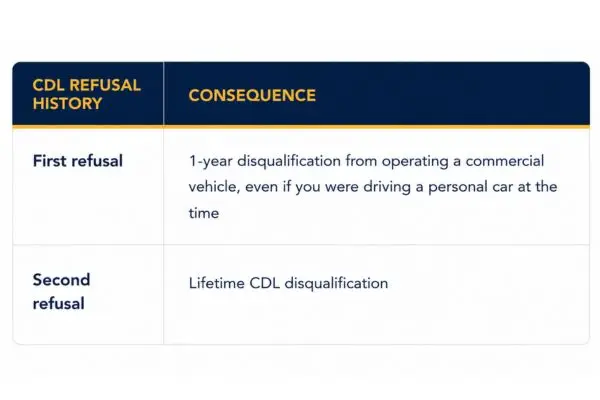
Anyone with a commercial license should treat a traffic stop for suspected DUI as an emergency call to a lawyer, not a wait-and-see situation.
A refusal is not the end of your options. It is a starting point for a defense strategy, and the right approach depends heavily on the specific facts of your stop. Some of the angles our attorneys look at on every refusal case include:
None of this means a suspension or a charge simply disappears. Every case turns on its own facts, and legal representation early in the process gives you the best chance to challenge what happened.
Don’t wait until the suspension takes effect to make that call. Schedule a free case review now so we can start reviewing the timeline while it still matters.
Refusal cases move through different courthouses depending on where you were stopped.
The administrative law side of your case, the license suspension, is handled separately by the Illinois Secretary of State, regardless of which county charged you criminally.

Our firm is staffed entirely by former prosecutors, including Alex Ktenas, a former Cook County Assistant State’s Attorney who spent years inside the Chicago and Markham courthouses before switching sides. That background means we know how these cases get built, and where they tend to fall apart.
We focus 100% of our practice on DUI and criminal defense in Illinois, and we treat every refusal case as a two-front fight: the administrative suspension and the underlying criminal charge.
Facing a refusal charge or a suspension notice is stressful, and the deadlines move fast. If you’re not sure what your next step should be, call (312) 800-1626 for a Free Case Review and let us walk through your timeline with you.
No. A refusal is a civil, administrative penalty handled by the Secretary of State. It is separate from the criminal DUI case, and you are still presumed innocent of the criminal charge regardless of what happens with your license.
First-time offenders who fail a chemical test often qualify for a Monitoring Device Driving Permit. Drivers who refuse the test are generally not eligible for that permit for the length of a first-offense suspension and must serve the suspension without driving privileges, though a Restricted Driving Permit may be available in limited hardship situations for repeat offenders.
You must request a hearing within 90 days of receiving your Notice of Statutory Summary Suspension. The suspension itself does not start until 46 days after the notice, so acting quickly gives your attorney the most time to prepare.
Generally not without a warrant. The Fourth Amendment protects against unreasonable searches, and Illinois courts have applied that protection to forced blood draws in most cases. Exceptions exist for serious injury or fatality crashes, where a warrant or judicial authorization may allow compelled testing.
Yes. Prosecutors can point to a refusal as evidence at trial and argue it shows consciousness of guilt. A skilled defense can push back on that inference and focus the jury on the state’s actual proof.