If I Don't Take a Breathalyzer, Won't My License Be Suspended?
 10/15/2026

A phone call from the police about your child is one of the most frightening calls a parent can get. It helps to know two things right away. A juvenile charge is not the same as an adult conviction, and Illinois has a separate court system built specifically to handle it.
Ktenas Law represents families across Chicago and Cook County when a minor is accused of a crime. This guide walks through the offenses minors face most often, how Illinois law treats them differently from adult charges, and what to do in the hours after an arrest.
A juvenile charge is not an adult conviction, and Illinois runs a separate court system for it. If the minor was under 18 when the offense is alleged to have happened, the case goes to juvenile court, which is built around rehabilitation rather than punishment.

Minors in Cook County are most often accused of:
State data from Cook County’s own juvenile detention center(opens in a new tab) backs this up. Weapons offenses and warrants make up a large share of admissions, alongside battery, robbery, and vehicle theft.
Every charge gets handled differently depending on the minor’s age, the offense, and whether it is the child’s first contact with the system. The sections below break down each category and what typically happens next.
A case falls under Illinois juvenile court if the minor was under 18 at the time of the alleged offense. That single rule decides whether a case goes through juvenile court, which focuses on rehabilitation, or adult criminal court, which does not.
Illinois splits juvenile cases into two categories:
There is one major exception to the under-18 rule. Illinois automatically prosecutes a minor who is at least 16 in adult court, with no juvenile hearing, for first-degree murder, aggravated criminal sexual assault, or aggravated battery with a firearm. More on that below.
The most common charges we see for minors in Cook County are theft, weapons, battery, disorderly conduct, and drug or alcohol offenses. Our criminal defense team handles these alongside the family.
Theft, also called larceny, is one of the most common charges minors face in Chicago. It ranges from shoplifting a few items to auto theft, and the seriousness of the charge usually tracks the value of what was taken.
Burglary and motor vehicle theft also show up regularly in Cook County’s juvenile detention numbers. Peer pressure and impulsivity are common threads, but the court still treats the conduct seriously, especially on a repeat offense.
Unlawful use of a weapon was the single largest offense category behind Cook County juvenile detention admissions in late 2024, according to state data. It topped theft, battery, and even outstanding warrants, making this one of the most serious charge types minors face in Chicago right now.
A weapons charge can escalate quickly. Illinois looks at whether the minor has a prior record, whether the weapon was loaded or displayed, and whether a school was involved. These cases often carry real detention risk, so an early, informed response matters.
Assault and battery charges are common among teenagers, and they do not always start with a fight. Many stem from a confrontation at school or an altercation during a theft. Domestic battery among family members is also one of the more frequent charges Cook County juvenile courts see.
Disorderly conduct covers a wide range of behavior, from fighting in public to making threats. Officers generally need to see an actual disruption, not just an argument, before an arrest is appropriate on this charge alone.
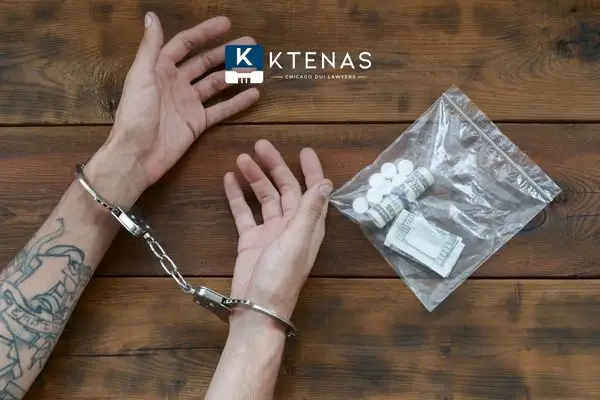
Minors in Chicago can face charges for underage possession of alcohol, public intoxication, drug possession, possession of drug paraphernalia, and driving under the influence. These charges often surface alongside other issues, like a traffic stop or a school incident, rather than on their own.
Illinois courts frequently look at drug and alcohol charges as an opportunity for intervention rather than punishment, particularly for a first offense. That does not mean the charge disappears on its own. It still needs to be handled correctly from the start.
Illinois gives police an option that does not exist in adult court. A case typically goes one of two ways:
Outcomes on a formal petition range from probation to a commitment to the Illinois Department of Juvenile Justice.
Two paths can send a minor’s case into the adult system:
The hearing path is a real possibility in serious cases, but it is not automatic. A family has a chance to respond before it happens.
Every juvenile case turns on its own facts: what happened, what evidence exists, and whether the right procedures were followed. A charge is not the same as a finding of guilt, and the right approach depends on the specifics of the case.
An attorney can review the police report and the evidence, then explain the realistic paths forward, whether that is a station adjustment, a negotiated resolution, or a contested hearing. No responsible attorney can guarantee a result, but a family should expect a clear explanation of the options at every stage.
Cook County runs the largest juvenile court system in Illinois by a wide margin. December 2024 state data shows its Juvenile Temporary Detention Center had more admissions that year than any other Illinois county, with weapons offenses, domestic battery, motor vehicle theft, and aggravated battery among the most common charges statewide.
That volume matters. Cook County’s Juvenile Justice Division, based at the Juvenile Court Center on South Hamilton Avenue in Chicago, runs its own judges, probation department, and procedures. Knowing how that specific court works often matters as much as the law itself.

Alex Ktenas, founding attorney at Ktenas Law, spent years as an Assistant State’s Attorney in Chicago and Markham before founding the firm. That background gives him an inside view of how Cook County prosecutors and juvenile court judges actually evaluate a case, not just what the law allows on paper.
That perspective matters most right after an arrest, when decisions about a station adjustment or a first court appearance can shape everything that follows. Ktenas Law works to make sure families understand every option before a decision gets made, not after.
Illinois juvenile court covers anyone under 18. A few serious violent charges against minors 16 or older go straight to adult court instead.
Juvenile records are generally confidential, and a 2024 Illinois law now schedules automatic expungement for many qualifying cases.
Yes. Certain serious violent charges go straight to adult court by law, and prosecutors can request a transfer hearing for other serious felonies.
An informal way for police to resolve a case without a formal petition, often through a warning or referral. Illinois caps how many a minor can receive.
It can, depending on how the case resolves and whether the record is later expunged.
Go to the station, tell your child not to answer questions until a lawyer is present, and don’t agree to any resolution before speaking with an attorney.