


Ignition Interlock Device Program Illinois BAIID
 11/21/2026
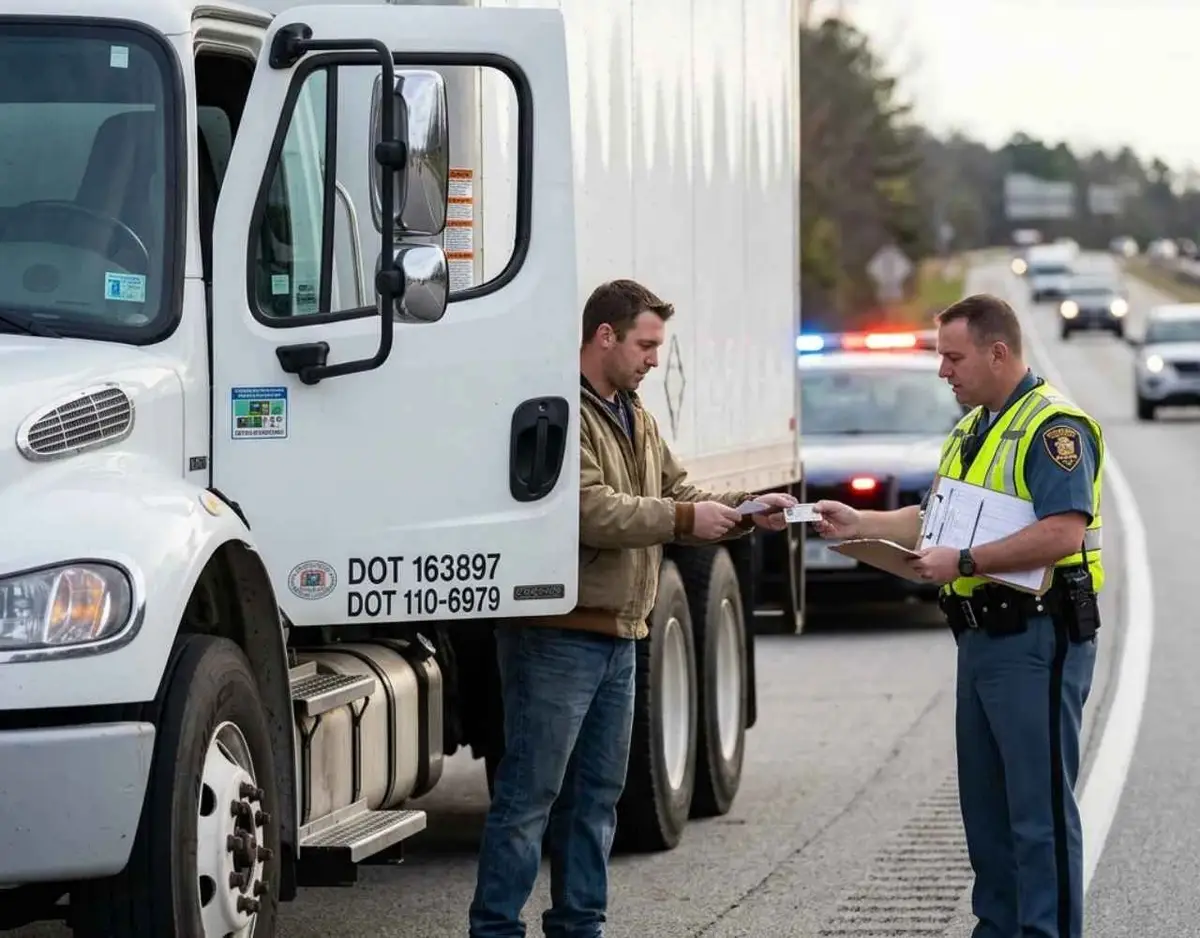
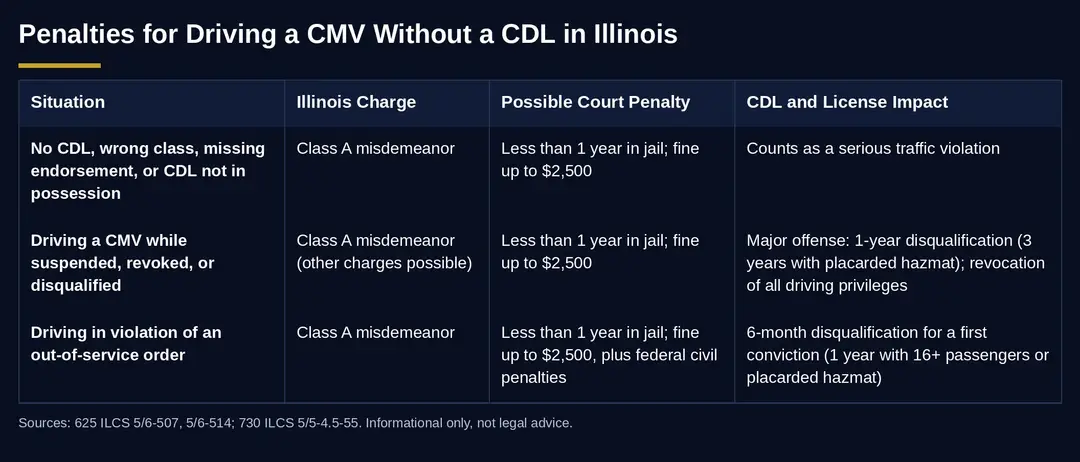
In Illinois, driving a commercial motor vehicle without a valid commercial driver’s license (CDL) is a Class A misdemeanor, not a paperwork problem. A conviction can bring jail time and fines, count toward CDL disqualification, and put a road trucking job at risk.
Our former prosecutors at Ktenas Law know how the State builds these cases. Call (312) 800-1626 for a free case review before your court date.

The rule comes from 625 ILCS 5/6-507 of the Illinois Vehicle Code. It says no one may drive a commercial motor vehicle (CMV) on Illinois roads without:
A conviction under this section is a Class A misdemeanor. Illinois sentencing law allows a jail sentence of less than one year and a fine of up to $2,500 for a Class A misdemeanor.
Jail is not automatic. Judges look at your driving history, the type of vehicle, what you were hauling, and how the stop unfolded.
Not every big truck requires a CDL. Under Illinois law, a vehicle is a CMV when it is used in commerce and meets any of these thresholds:
GVWR is the maximum loaded weight the manufacturer says a vehicle can safely carry. It is printed on a label inside the driver’s door, and it matters more than what the truck actually weighed that day.
Illinois law carves out several exceptions:
Non-CDL drivers can legally operate many trucks under 26,001 pounds. Once a vehicle crosses a threshold above, the CDL requirement kicks in.
Illinois follows the federal CDL Classes system. Holding the wrong class is treated the same as holding no CDL at all.
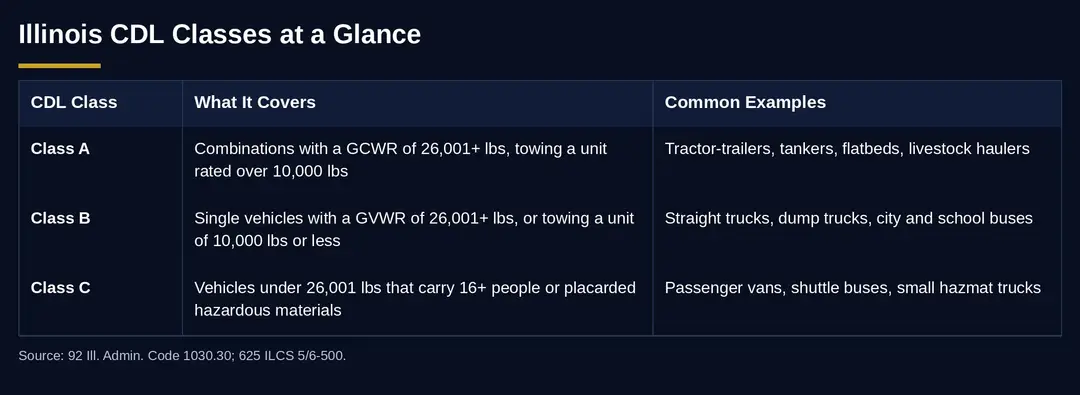
A Class A CMV driver can usually operate Class B and Class C CMV vehicles with the right endorsements. A Class B CMV license does not cover a Class A combination.
Illinois also issues non-CDL license classes for some heavier vehicles. The letter on your license does not prove you hold a CDL. A true CDL is marked “Commercial Driver’s License.”
Endorsements are add-ons that allow you to drive certain vehicles or haul certain cargo. Common ones include:
Special cargo haulers face the biggest risk here. A driver with a valid Class A CDL who hauls placarded loads without a hazardous materials endorsement can still face a charge under 6-507.
Most no-CDL charges do not involve someone who has never driven a truck. They usually look like this:
The last scenario carries the heaviest consequences, which we cover below.

Illinois lists a violation of 6-507(a) as a Serious Traffic Violation. These violations stack up over a three-year window.
Other serious traffic violations include:
A single serious violation does not trigger disqualification. Two convictions in three years can. CDL holders should also know that some serious moving violations in a personal car can count when they lead to a suspension or revocation of regular driving privileges.
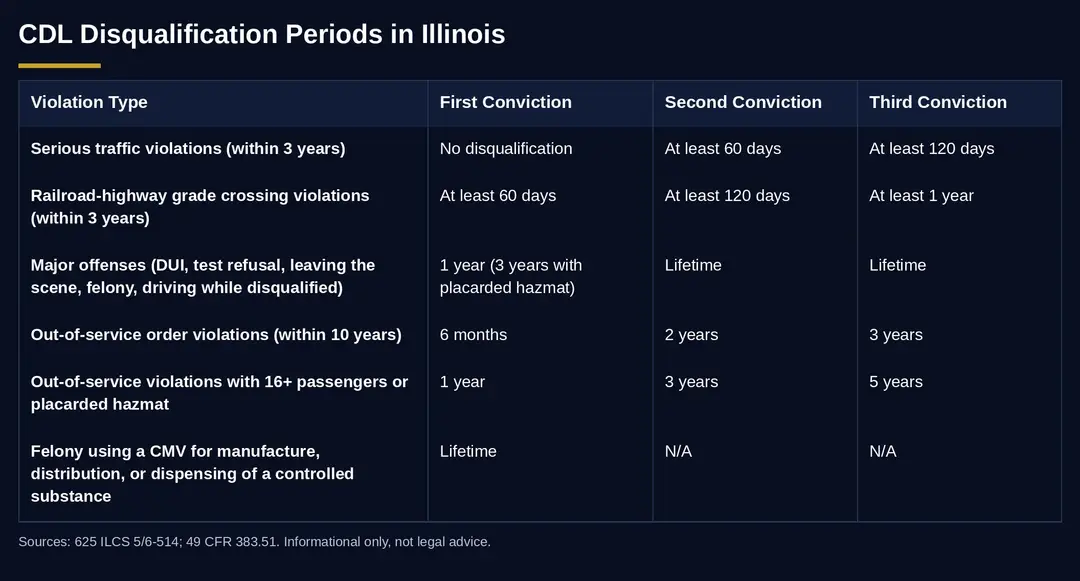
These are Temporary Disqualifications for most violation types. Under Illinois’s CDL disqualification law, 625 ILCS 5/6-514(opens in a new tab), a lifetime disqualification for repeat major offenses may be reduced to 10 years in some cases when federal rules allow it.
For a deeper breakdown, see our guide to Illinois CDL disqualifications.
A no-CDL charge often comes with other problems at the same stop.
Alcohol and drugs. CMV drivers face a 0.04 Blood Alcohol Concentration limit, half the standard limit for regular drivers. Illinois’s Implied Consent Law means refusing a chemical test or blood alcohol test can lead to a one-year disqualification on its own. Our CDL DUI page explains how these cases work, and our blood alcohol concentration guide covers how BAC is measured.
Out-of-service orders. An out-of-service order is a directive from an officer or agency that bars a driver, vehicle, or carrier from operating for a set time. Driving through one adds a separate disqualification and federal civil penalties.
Drug distribution. Using a CMV in a felony involving the manufacture, distribution, or dispensing of a controlled substance brings a lifetime disqualification. That charge also calls for a criminal defense lawyer familiar with drug crimes.
The consequences do not stop with the driver. Illinois law bars employers from letting anyone drive a CMV without a current CLP or CDL with the proper class and endorsements.
Federal rules add civil penalties on top of state charges:
The Federal Motor Carrier Safety Administration adjusts these amounts for inflation, so the exact figures can change year to year.
Understanding the licensing path helps explain why courts take shortcuts seriously. The Illinois Secretary of State oversees the process:
Veterans may qualify for a military waiver of the skills test based on their military CMV experience.
Every case turns on its own facts. A charge is not a conviction, and the State still has to prove each element. Questions we look at include:
Taking the right steps early protects your options:

A no-CDL charge can look minor on paper. For a commercial driver, it can mean lost income, a tougher job search, and a record that follows you for years.
Ktenas Law is built around former prosecutors. Alex Ktenas served as an Assistant State’s Attorney in Cook County, and Nick Ktenas handles our CDL defense work with a detail-driven approach to records and procedure. We know where the State’s case is strong and where it may fall short.
Do not wait until your court date. Reserve a priority case review by calling (312) 800-1626 or contacting our team online.
No. Under 625 ILCS 5/6-507, it is a Class A misdemeanor, though related charges at the same stop can raise the stakes.
Yes, it is possible. A Class A misdemeanor carries a possible jail sentence of less than one year, and the actual sentence depends on your history and the facts.
A single serious traffic violation does not trigger disqualification by itself. A second conviction within three years brings at least 60 days.
Only when a CDL holder who is licensed for that vehicle rides with you; driving alone on a CLP violates Illinois law.