

DUI Arrest in Will County: What Happens Before Your Joliet Court Date
 11/03/2026
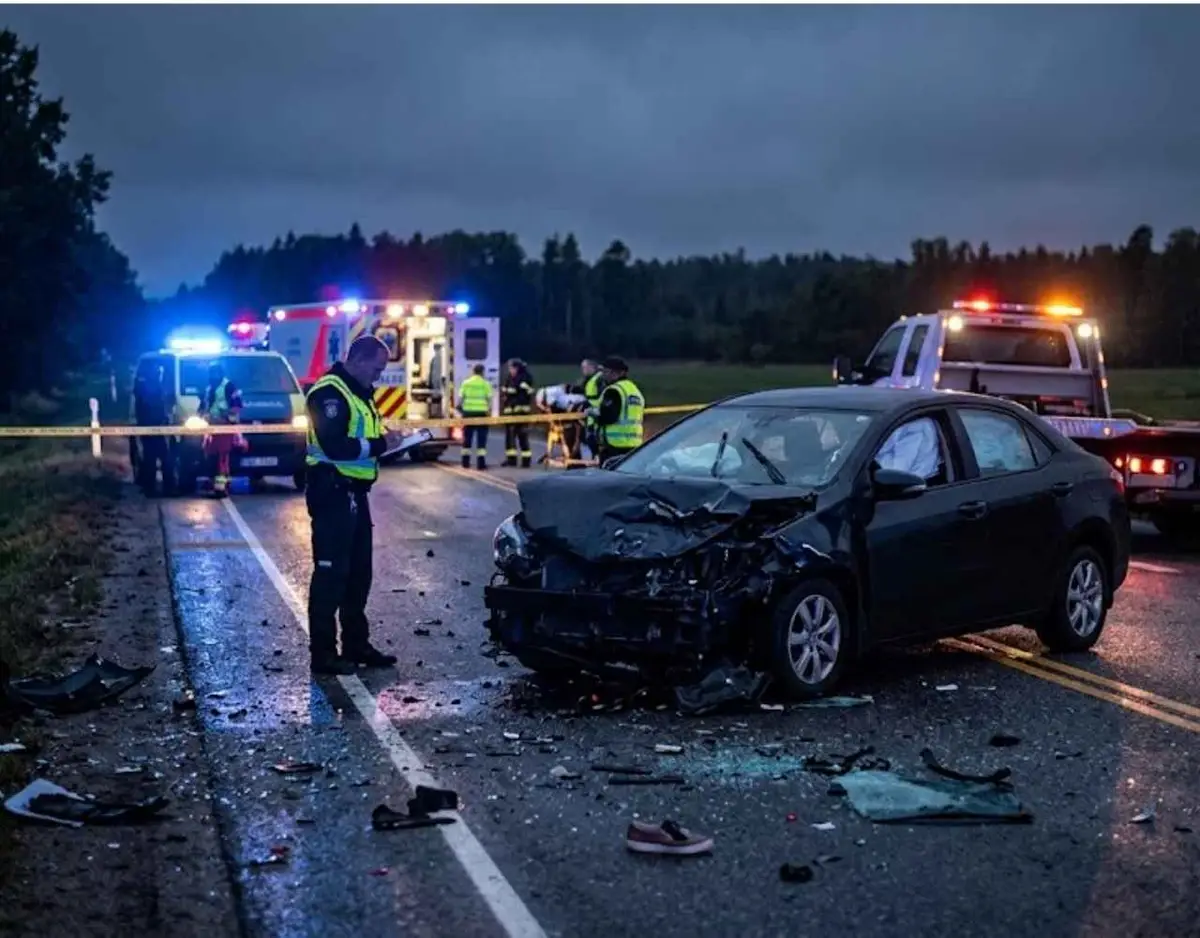
In Illinois, driving under the influence is already a serious charge. When a DUI crash takes someone’s life, the charge changes completely. Prosecutors no longer treat it as a misdemeanor. They treat it as aggravated driving under the influence, a felony that can carry years in prison, a mandatory license revocation, and a permanent criminal record.
If you or someone you love is facing this charge in Cook, Will, or DuPage County, the decisions made in the first few days matter. Ktenas Law is built entirely by former prosecutors who know how the state builds these cases from the inside. Below is a plain-English breakdown of what Illinois law actually requires, what the penalties look like, and what happens next.
An aggravated DUI causing death is a Class 2 felony carrying 3 to 14 years for one death, and 6 to 28 years for two or more. Probation is unavailable unless a judge finds extraordinary circumstances, which is a bar that is rarely met.

An aggravated DUI causing death is a Class 2 felony under Illinois law. If convicted, a person faces a prison term of 3 to 14 years if one person died, or 6 to 28 years if two or more people died. Probation is off the table unless a judge finds “extraordinary circumstances” that justify it, a high bar that is rarely met. A prison sentence under this charge must also be served at 85 percent, meaning there is no day-for-day good time credit.
That is the short version. The rest of this page walks through how prosecutors build this case, what a defense can actually look like, and what happens to a driver’s license along the way.
Illinois does not have a separate crime called “DUI murder.” The charge is aggravated driving under the influence, under 625 ILCS 5/11-501(d)(1)(F).
It applies when:
“Proximate cause” is the key phrase. Prosecutors do not have to prove the driver meant to hurt anyone. Unlike murder, intent is not an element of this offense. The state only has to show two things: the person was driving under the influence, and that impairment directly contributed to the fatal crash.
A correction worth making here: DUI-related deaths in Illinois are not charged as “reckless homicide” alongside the DUI count. Illinois lawmakers moved that language out of the reckless homicide statute (720 ILCS 5/9-3) back in 2003 and folded it directly into the aggravated DUI statute instead.
Reckless homicide today covers different situations entirely, like a death in a school zone or a construction zone. It does not cover an alcohol- or drug-impaired crash. A death caused by an impaired driver is prosecuted as aggravated DUI, full stop, not as a separate reckless homicide charge.
Illinois has no separate crime called DUI murder. The charge is aggravated DUI under 625 ILCS 5/11-501(d)(1)(F), and our aggravated DUI page explains how it is built.
Under 625 ILCS 5/11-501(d)(2)(G), a conviction carries:
Separate from the felony case itself, the standard 46-day statutory summary suspension clock still starts the moment someone is arrested for DUI, regardless of whether a death is later charged as part of the case. That administrative suspension runs on its own track from the criminal proceedings.
A criminal charge is not the only legal exposure here. The family of the person who died can separately pursue a wrongful death claim in civil court, seeking compensation for things like funeral costs, medical bills, and lost future income. That civil case runs on a different track, with a different burden of proof, than the criminal charge. A conviction, an acquittal, or a plea in the criminal case does not automatically decide the civil one.
To convict someone of aggravated DUI causing death, prosecutors generally need to establish:
To prove these elements, the state typically relies on chemical test results (breath, blood, or urine), officer observations, field sobriety test results, accident reconstruction reports, and witness statements.

Even when the facts look grim on paper, a felony charge is not a conviction. A defense attorney’s job is to test every part of the state’s case, not to promise a particular outcome. Depending on the facts, that can include:
No attorney can guarantee a dismissal, a reduced charge, or a particular sentence. What a strong defense can do is make sure every piece of the state’s evidence is actually tested before a plea or a trial decision gets made.
Aggravated DUI causing death is a state felony, so the classification and sentencing range are the same everywhere in Illinois. What differs by county is the courthouse, the judges, and the prosecutor’s office actually handling the case.
In Cook County(opens in a new tab), felony DUI cases move through the Criminal Division, and depending on where the arrest happened, through branch courts including Markham. Alex Ktenas spent his career as an Assistant State’s Attorney in both the Chicago and Markham offices before founding the firm, and understands the charging and plea patterns specific to those courtrooms. Lauren Ktenas built her background as a Will County prosecutor, adding insight into how that county’s court and state’s attorney’s office typically handles felony DUI matters. That former-prosecutor perspective, on both sides of Cook and Will County courts, shapes how the firm evaluates a case from the first phone call.

Prosecutors and their investigators start building an aggravated DUI death case immediately: securing chemical test results, pulling officer body camera footage, and locking in witness statements while memories are still fresh. A defense that starts just as early, auditing that same evidence before it hardens into a finished narrative, is in a far stronger position than one that starts after the state has already built its file.
This is the exact reason the firm’s approach centers on precision from day one: reviewing the breathalyzer logs, the officer’s reports, and the accident reconstruction with the same scrutiny a former prosecutor would have once brought to building the case, now turned toward defending it.
An aggravated DUI death charge moves fast, and so does the evidence against you. Ktenas Law is built by attorneys who spent their careers on the prosecution side of Cook and Will County courtrooms before turning that experience toward defense. Reserve a Priority Case Review to talk through what the evidence in your case actually shows, and what your options are from here.
Call (312) 800-1626 or request a Reserve a Priority Case Review through the contact page.
Illinois does not use the term “vehicular manslaughter.” A death caused by an impaired driver is charged as aggravated driving under the influence under 625 ILCS 5/11-501(d)(1)(F), a Class 2 felony, not as a separate homicide charge.
Only if the court finds extraordinary circumstances that specifically justify it. Absent that finding, the law requires a prison sentence within the statutory range.
No. Unlike murder, this charge does not require intent to kill or harm. The state only has to prove the person was driving under the influence and that the impairment was a proximate cause of the death.
The Secretary of State must revoke your driving privileges. For this charge, you cannot even apply to have them restored until at least 2 years after the revocation, or 24 months after release from prison, whichever is later, and only after a hearing.
Yes. The deceased person’s family can bring a separate wrongful death claim in civil court, regardless of how the criminal case turns out.
That can be relevant to whether the DUI was truly a proximate cause of the death, which is an element the state must prove. It does not automatically resolve the case, but it is a legitimate area for a defense to examine.