


What Is the Penalty for Driving a Commercial Vehicle Without a CDL?
 11/25/2026
Most gun owners who change a part on a firearm want a better grip, a smoother trigger, or a rifle that fits their build. Illinois law still draws hard lines around certain modifications, and a few of them carry felony charges with mandatory prison time.
At Ktenas Law, our gun lawyers defend weapons charges across Cook County and Will County. Founding partner Alex Ktenas served as a Cook County Assistant State’s Attorney in Chicago and Markham, so he knows how prosecutors build these cases. Here is what Illinois bans, what each charge can carry, and what to do next.

Illinois law, mainly 720 ILCS 5/24-1 (opens in a new tab)and PICA, makes these modifications crimes:
Each weapon or device is a separate violation, so three switches can mean three counts.
Many upgrades remain legal. State police guidance says scopes, red dots, lasers, flashlights, slings, and Picatinny rails are not assault weapon attachments.
Learn More: How to Beat a Gun Charge
A switch is a small part that can make a pistol fire continuously with one trigger pull. Illinois defines a machine gun to include any combination of parts designed to convert a weapon into one, so you do not need a finished automatic weapon to face the charge.
If the weapon is loaded and on your person or in a vehicle’s passenger compartment, the charge becomes a Class X felony: 6 to 30 years, with no probation. Possessing a machine gun, short-barreled gun, or silencer within 1,000 feet of a school, park, courthouse, public housing, or public transit facility is also a Class 2 felony with 3 to 7 years.
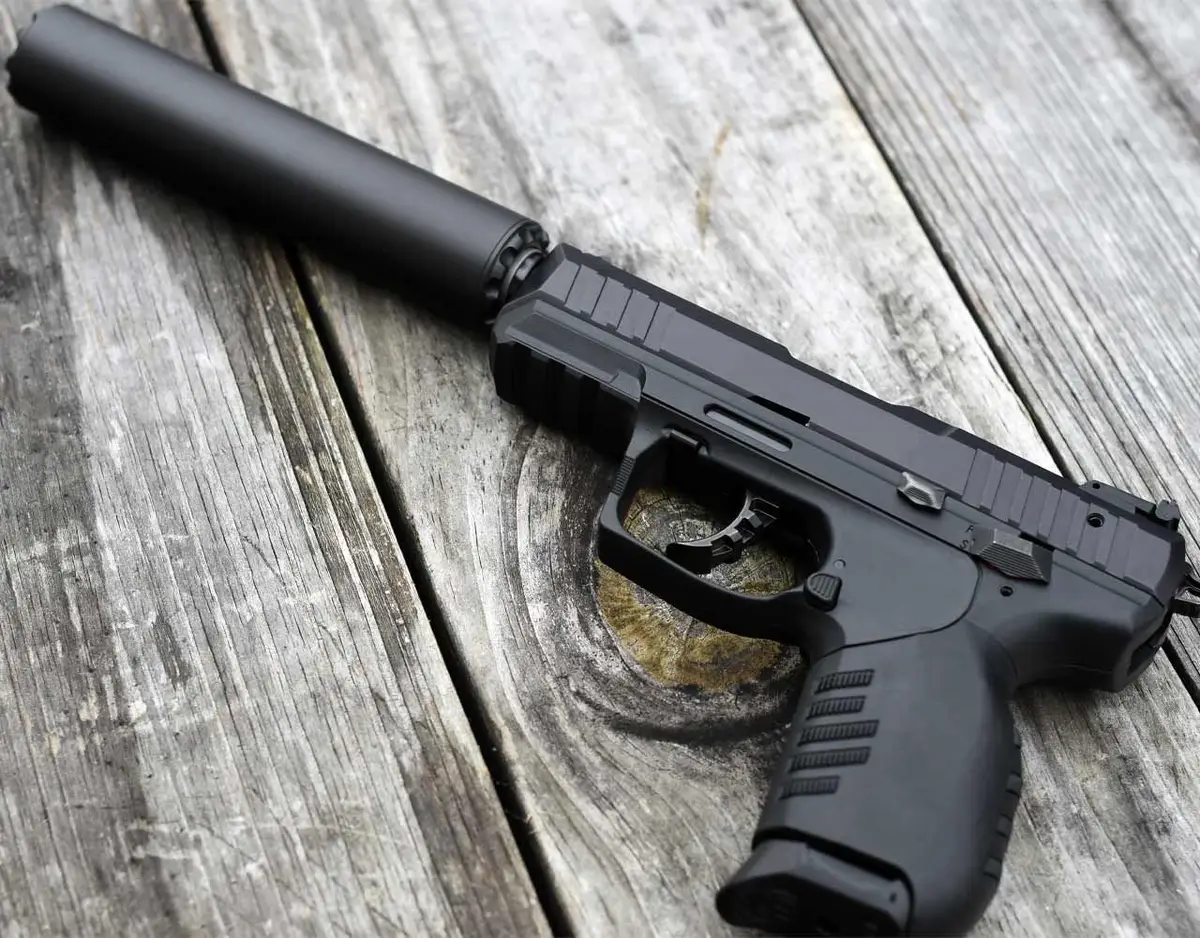
Federal law allows many short-barreled rifles and suppressors with National Firearms Act registration. Illinois does not. A federal tax stamp does not make a silencer legal for a private Illinois owner.
Short-barreled rifles have two narrow exceptions under the law:
Short-barreled shotguns have no similar carve-out, and anyone claiming an exemption carries the burden of proving it.

The Protect Illinois Communities Act(opens in a new tab) (PICA) took effect January 10, 2023. It bans the sale and purchase of assault weapons, .50 caliber rifles, and High-Capacity Magazines.
Owners of regulated rifles had to file an endorsement affidavit through their Firearm Owners Identification (FOID) account by January 1, 2024. Possession of assault weapons without that affidavit is a Class A misdemeanor for a first offense and a Class 3 felony after that. Possessing a prohibited magazine is a petty offense with a $1,000 fine for each one.
Carry licenses do not create an exception. Under state police guidance, the carry of firearms by license holders must still comply with PICA, including the 15-round magazine limit.
Learn More: Unlawful Use of a Weapon in Illinois
The Cook County Assault Weapons Ban predates PICA and still applies countywide. On June 30, 2026, the U.S. Supreme Court agreed to hear Viramontes v. Cook County, which asks whether the Second Amendment protects AR-15-style rifles.
PICA has its own history in the federal courts. A federal judge in southern Illinois blocked it in April 2023, and the Seventh Circuit Appeals Court paused that order within days. On July 9, 2026, a three-judge panel of that court upheld the ban in Barnett v. Raoul.
Chicago has been here before. After the Supreme Court struck down the city’s ban on possession of handguns in McDonald v. City of Chicago (2010), the Chicago City Council rewrote its ordinance. For now, a pending appeal does not pause enforcement.
Related: Charged with a gun crime? Talk to a Chicago criminal defense attorney today.
Federal prosecutors can file their own case. Possessing a machine gun violates the law and carries up to 10 years. Tie a machine gun or silencer to a crime of violence or drug trafficking, and federal law requires at least 30 years. If anyone suffers bodily harm, more charges can follow.

Groups such as the Law Center to Prevent Gun Violence track Illinois closely because it layers many rules on top of federal law. Three of these rules surprise owners most:
Related: Learn more about an unlawful use of a weapon charge in Illinois.
A charge is not a conviction. Take these steps right away:
The State must prove you knowingly possessed the weapon or part. Illinois presumes everyone in a car possesses a machine gun or short-barreled gun found inside, but that presumption drops away when officers find it on one person. Lab testing may show whether a part works as charged, and the stop itself must satisfy the Fourth Amendment. The right defense depends on the evidence, the charge, and the court.
Alex Ktenas spent years on the prosecution side in Cook County courts, and Lauren Ktenas served as a Will County Assistant State’s Attorney. We know how the State evaluates possession and conversion charges, and where those cases tend to be weakest.
Call (312) 800-1626 or request a Free Case Review with our Chicago gun charge lawyers today.
Yes. Illinois treats conversion parts as a machine gun. Possession is a Class 2 felony, or Class X if the weapon is loaded on your person or in a car’s passenger compartment.
Generally, no. Federal registration alone does not satisfy Illinois law. The exemptions cover only Curios and Relics licensees and qualifying reenactors.
Not for private owners. Possessing one is a Class 3 felony under 720 ILCS 5/24-1(a)(6), even with federal registration.
No. Both the county ban and PICA remain enforceable unless and until a court rules otherwise.
It depends. Buying one after January 10, 2023 is prohibited. Owners who had one before that date may keep it only in limited places, such as their own property or a licensed range.