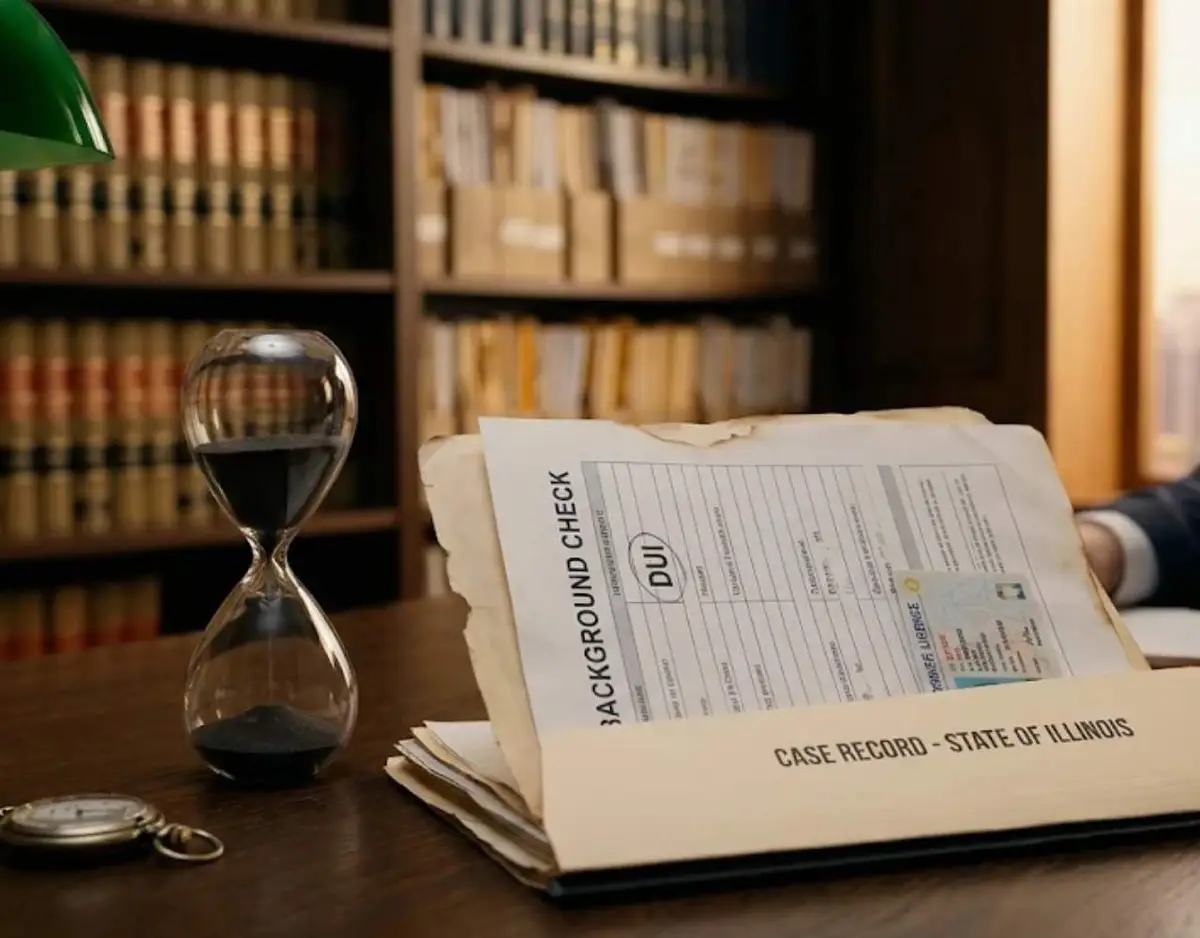
How Long Does a DUI Stay on Your Record in Illinois?
 11/10/2026

A felony charge in Will County moves through a courthouse, a prosecutor’s office, and a set of legal deadlines all at once. It can seem like nothing happens for weeks, and then several things happen in a single day. This guide explains the stages and the clocks that matter.
We defend felony and misdemeanor charges in Will County, and these cases are heard in Joliet.
A felony case in Will County is heard on the fourth floor of the Will County Courthouse in Joliet and prosecuted by the Will County State’s Attorney’s Office. Illinois law requires a preliminary hearing or a grand jury indictment within 30 days if you are in custody, or 60 days if you were released.
Illinois law: 725 ILCS 5/109-3.1(opens in a new tab), 725 ILCS 5/103-5(opens in a new tab), and the sentencing statutes starting at 730 ILCS 5/5-4.5-25(opens in a new tab).
Felony cases in Will County carry a CF case number. They are heard on the fourth floor of the Will County Courthouse, 100 West Jefferson Street. Our Will County Courthouse guide covers hours, security, and parking.
Your first appearance comes first, and it addresses release. See pretrial release in Will County for how that works since cash bail ended.
Before a felony case can go to trial, a judge or a grand jury has to find enough evidence to move it forward. Illinois law calls these a preliminary examination and a grand jury indictment. One of the two is required.
The deadline depends on custody. If you are in custody, it is 30 days from the day you were taken into custody. If you were released, it is 60 days from the day of your arrest. Delay caused by the defendant, and a few other situations, pause the clock.
If a grand jury indicts you first, a preliminary hearing is not needed. When a preliminary hearing does happen, it is a chance to test whether the State has enough evidence to go forward.
Illinois also sets a deadline for trial. If you are in custody, the case must go to trial within 120 days of the day you were taken into custody, unless the defendant causes a delay. If you are released, the trial must happen within 160 days of the date you demand it.
This is where many people are surprised. Delay is treated as agreed to unless you object with a written or oral demand for trial on the record. A missed court date also waives a demand for trial that you already made.
That is why timing is a decision for you and your attorney. It is not something to leave to chance.
Illinois sorts felonies into classes, and the class sets the basic range of prison time the law allows. Some offenses cannot receive probation, and extended terms apply in certain cases.
Where a charge falls depends on the statute and the facts. Our guide to Class X felony drug charges shows how the top class works in one kind of case.
According to the Will County State’s Attorney’s office, the county runs problem-solving courts. They include Drug Court, Mental Health Court, and Veterans Court, along with an Adult Redeploy Illinois program.
Each program has its own rules for who can take part, and the program decides who is accepted. If your charge involves substance use, a mental health condition, or military service, ask your attorney whether a program could apply. Our guide to TASC probation explains one treatment-based path.
The six stages most felony cases pass through, from arrest to sentencing.
One of our attorneys is a former Will County prosecutor, and all of our attorneys have prosecuted cases before defending them. We look at how the case was built, what the State can prove, and which deadlines are running.
If your felony charge is a DUI, see felony DUI in Illinois. For help understanding the choices ahead, read how plea bargains work.
Felony cases are heard at the Will County Courthouse, 100 West Jefferson Street, Joliet. The Circuit Clerk lists felony cases, which carry a CF number, on the fourth floor.
The Will County State’s Attorney’s Office prosecutes felony cases filed in the county. Our attorneys defend you against that office, and one of them is a former Will County prosecutor.
At a preliminary hearing, a judge decides whether the State has enough evidence to move the case forward. A grand jury makes a similar decision privately. Illinois law requires one or the other within 30 days if you are in custody, or 60 days if you were released.
If you are in custody, 120 days from the day you were taken into custody, unless the defendant causes delay. If you are released, 160 days from the date you demand trial. Delay is treated as agreed to unless you object on the record.
Some felony classes allow probation, and some offenses do not. For example, certain aggravated DUI charges cannot receive probation. Whether it is available to you depends on the exact charge.
The State’s Attorney’s office lists Drug Court, Mental Health Court, Veterans Court, and an Adult Redeploy Illinois program. Each program sets its own rules, so ask your attorney whether one could apply to your case.
You can ask for a public defender if you face possible jail time, and you can also speak with a private attorney first. The first appearance addresses release, so many people want advice before it.
You will speak with an attorney, not an intake screener. Tell us what you were charged with and when your next date is, and you will get a straight read on the deadlines you face.
Call our Frankfort office at (815) 384-0050 or reach out through our contact page.
This page is general information about Illinois law and is not legal advice. Deadlines and sentencing depend on the exact charge and the facts of the case. Speak with an attorney about your situation.