


What Is the Penalty for Driving a Commercial Vehicle Without a CDL?
 11/25/2026
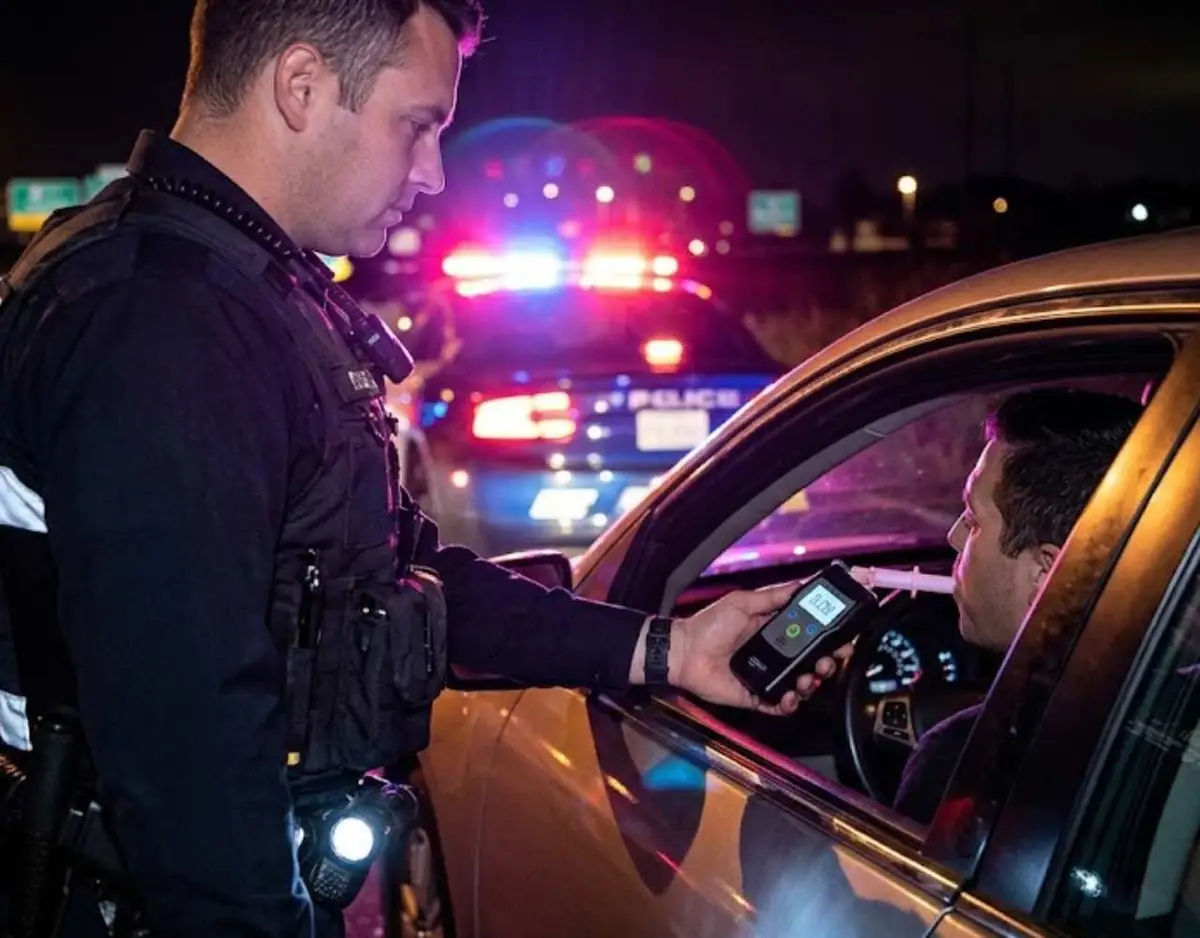
A single number can shape an entire DUI case. After a traffic stop, police officers may ask for a breath, blood, or urine sample, and the result becomes your blood alcohol concentration, or BAC.
Many people assume that number settles everything. It does not.
BAC tests depend on equipment, procedure, timing, and the people running them. Each of those can go wrong. At Ktenas Law, every attorney on our team is a former prosecutor, so we know how the State builds a case around a BAC result and where that evidence tends to break down.
If you were arrested for DUI anywhere in Illinois, call (312) 800-1626 or request a free case review today. The clock on your license started the moment you received your suspension notice.
Blood alcohol concentration is the amount of alcohol in your blood or breath at the moment of testing. Illinois law defines alcohol concentration as either:
So a .08 BAC means 0.08 grams of alcohol per 100 milliliters of blood (or the breath equivalent). That is the legal limit for most adult drivers in Illinois.
Your blood alcohol level depends on more than how many drinks you had. Body weight, food, the pace of drinking, and how long ago you drank all affect it. Two people can have a couple of drinks together and test at very different numbers.
Illinois does not use one limit for everyone. The threshold depends on your age, your license, and the vehicle you were driving.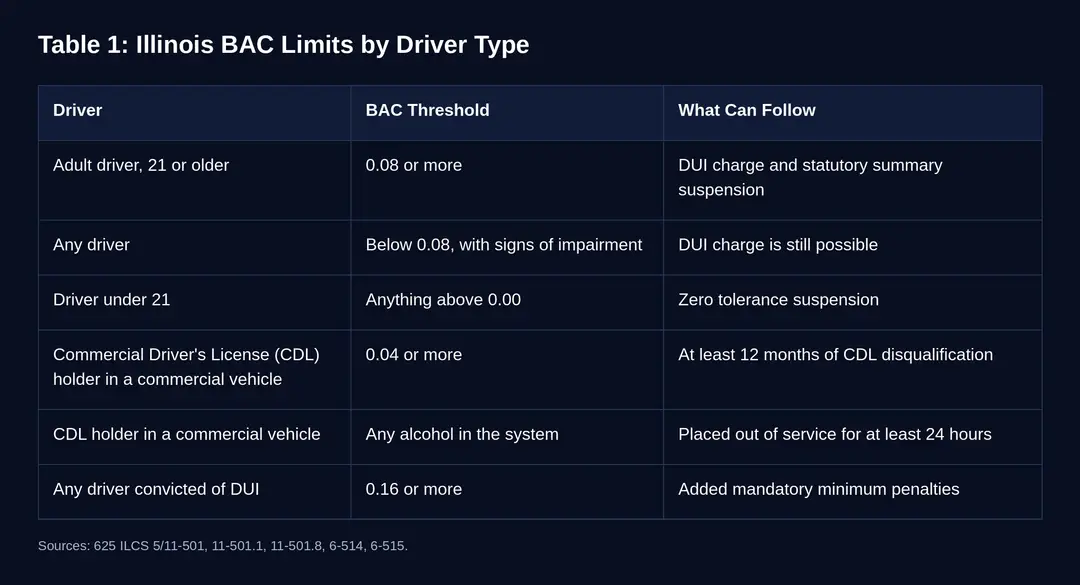
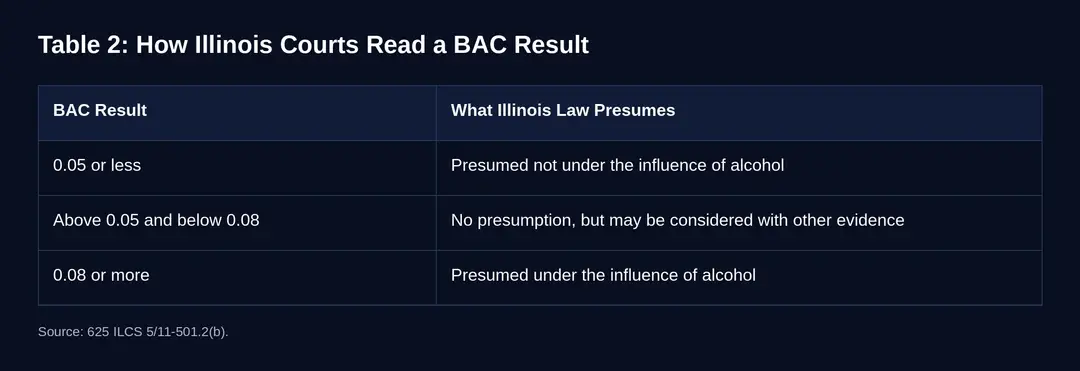
Illinois law(opens in a new tab) presumes a driver at 0.05 or less was not under the influence of alcohol. Between 0.05 and 0.08, there is no presumption either way. Prosecutors can still use that number alongside other evidence, such as driving behavior or field sobriety results.
That means a “couple of drinks” defense is not automatic. The State can try to prove physical impairment without a .08 BAC.
Illinois takes a zero tolerance policy toward young drivers. If a driver under 21 tests above 0.00, the Secretary of State can suspend driving privileges even without a DUI conviction.
A first zero tolerance suspension lasts 3 months after a positive test, or 6 months after a refusal. Repeat suspensions run longer. An inexperienced driver facing this for the first time often does not realize a criminal underage DUI charge can also follow if the BAC reaches 0.08 or other evidence shows impairment. Learn more about the Illinois zero tolerance law.

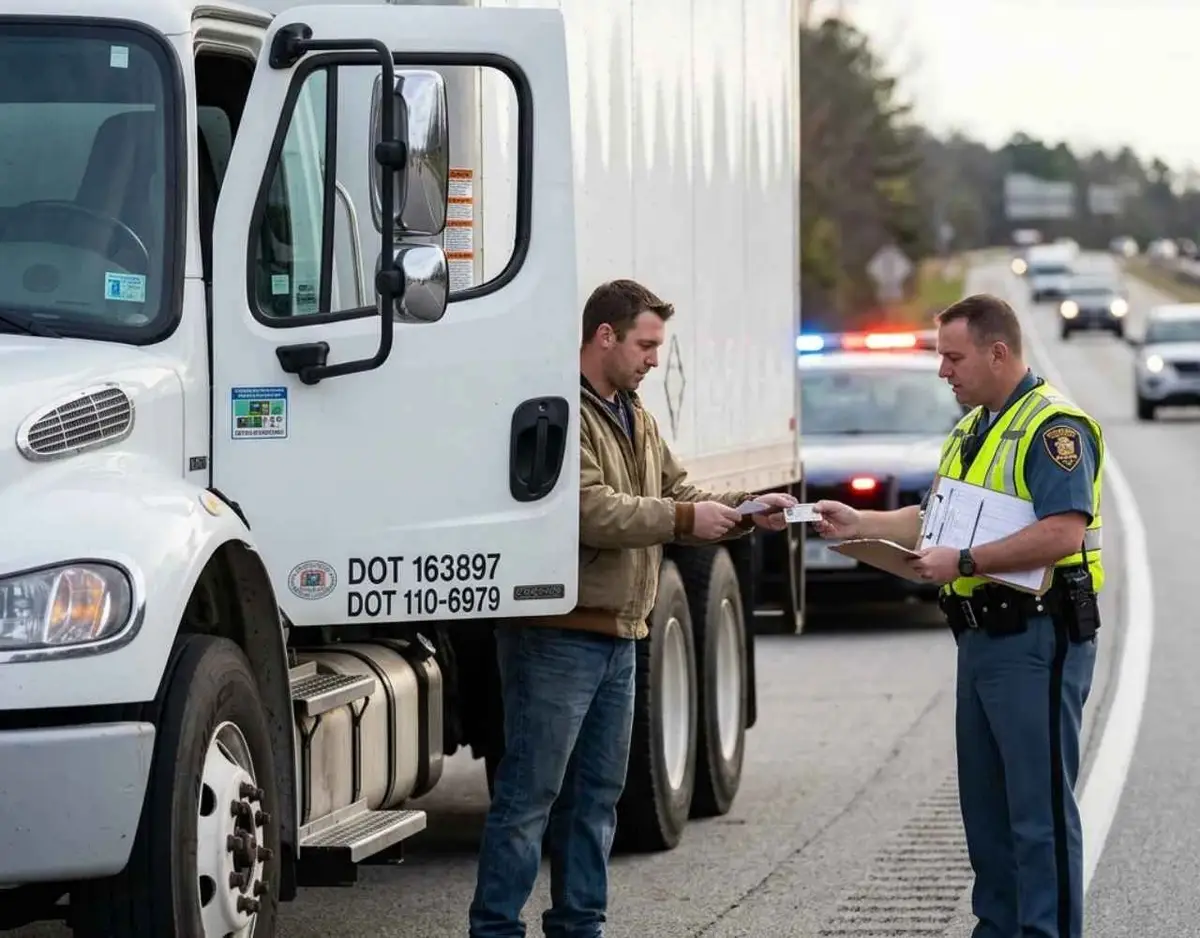
For a commercial driver, the limit drops to 0.04 while operating a commercial motor vehicle. A first violation brings at least 12 months of disqualification, or at least 3 years if the driver was hauling placarded hazardous materials.
A second qualifying violation can lead to a lifetime restriction on commercial driving. Illinois law also disqualifies CDL holders for a DUI in their personal vehicle. If your livelihood depends on your CDL, read more about CDL DUI defense.
Under Illinois implied consent law, driving on Illinois roads counts as a person’s consent to chemical testing after a lawful DUI arrest. Implied consent covers blood, breath, urine, and other bodily substances. It does not require you to perform roadside field sobriety tests.
Blood alcohol testing in Illinois usually takes one of three forms. Each method has its own evidential requirements and weak points.
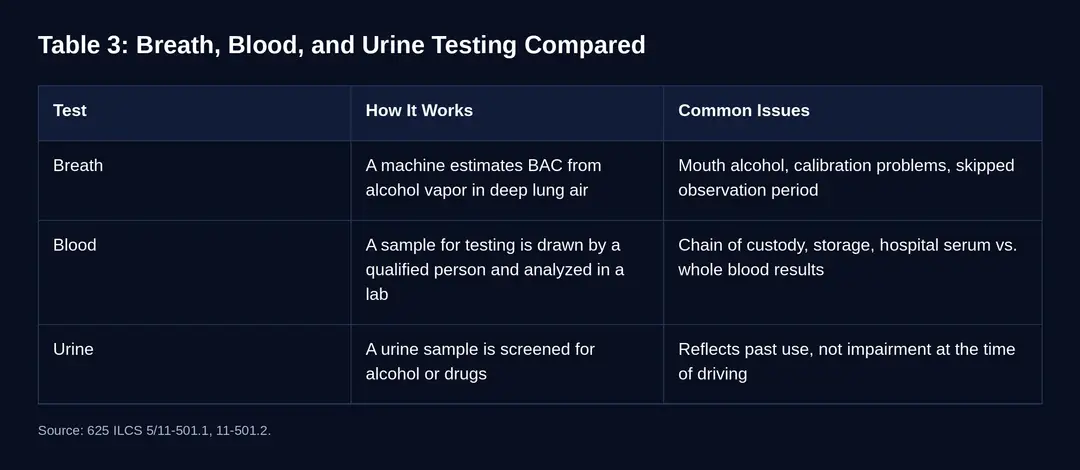
Illinois law requires chemical analysis to follow standards set by the Illinois State Police. The person drawing blood or running the test must hold the proper qualifications or permit. You also have the right to get an additional test from a qualified person of your own choosing.
Blood draws come up often in serious cases. If police took blood without your agreement, read about forced blood draws in Illinois. If you declined testing, see what happens when you refuse a breathalyzer.
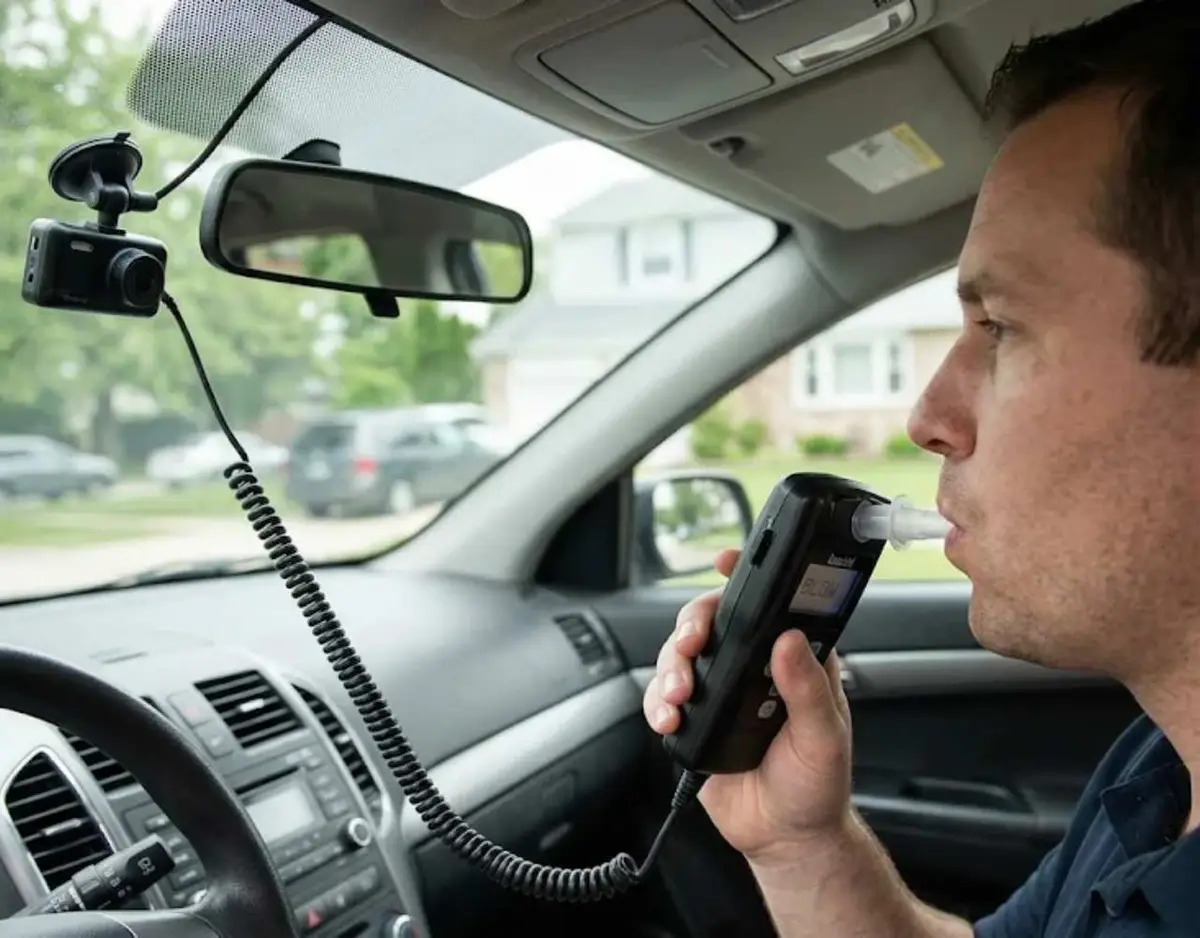
A breath test is an estimate, not a direct measurement of blood. That gap creates room for error, and it is one reason unreliable breathalyzer tests are a frequent issue in DUI defense.
Breath machines read alcohol vapor. They cannot always tell where that vapor came from. Possible sources of false positives include:
That is why our team looks closely at the machine’s maintenance and calibration logs in breath test cases. Partner Nick Ktenas is known for auditing these records line by line, because a single gap in the paperwork can call the result into question.
Alcohol keeps absorbing into the bloodstream for a period after your last drink. A test taken an hour after the stop may show a higher number than you had while driving.
The time of testing matters for this reason. Advanced testing methods and a careful look at absorption timing can sometimes show that a driver was under the limit at the wheel, even if a later test read higher. Every case depends on its own facts.
Hospitals test blood for medical treatment, not for blood alcohol purposes in court. Many hospital labs test serum (the liquid part of blood) rather than whole blood. Serum results often run higher than forensic whole blood results, so a defense attorney should review which method the lab used.
A valid prescription does not automatically prevent a DUI charge. If police believe a prescribed medicine affected your driving, they may pursue a drug DUI even with a low or zero BAC. A urine sample or blood test may become central to that case. Read more about drug DUI penalties in Illinois.
A BAC number rarely stands alone. Prosecutors usually combine it with other evidence:
The officer’s account is often the glue holding this together. But officers make mistakes. Notes may conflict with dashcam or bodycam footage. A driver the officer had under suspicion may have shown nervousness, not impairment. Unreliable officer testimony can be challenged through careful cross-examination.
As former prosecutors, we have built these cases ourselves. We know which pieces the State leans on and how to test each one.
A failed or refused chemical test triggers a statutory summary suspension. This is a civil license suspension, separate from the criminal DUI case.
The suspension takes effect on the 46th day after you receive notice. You can ask for a court hearing to challenge it within 90 days of notice, but asking for a hearing does not pause the suspension. Acting early improves your chance of being heard before day 46.
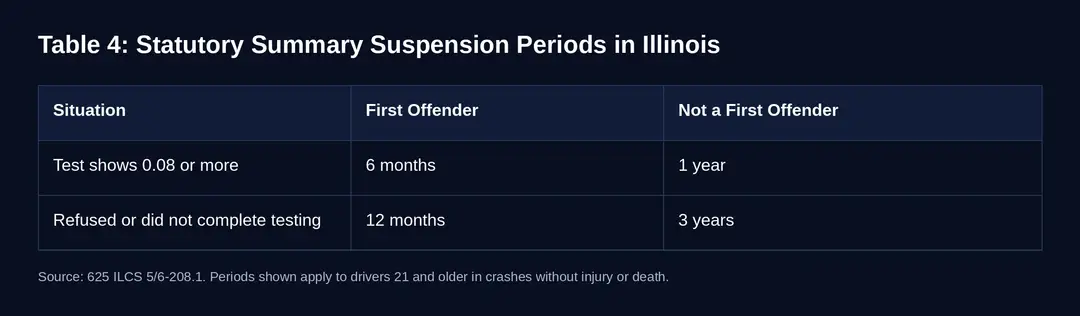
Periods shown apply to drivers 21 and older in crashes without injury or death.
The penalties grow on the criminal side as BAC rises. A first DUI conviction with a BAC of 0.16 or more carries a mandatory minimum of 100 hours of community service and a $500 fine. A second DUI at 0.16 or more brings at least 2 days in jail and a $1,250 minimum fine.
A BAC result is only as strong as the test, the timing, and the people behind it. Breath machines need maintenance. Blood samples need proper handling. Officers need to follow procedure from the stop through the test.
When any link in that chain is weak, the number deserves a closer look. That is the work our team does every day.
Ktenas Law is a DUI defense firm staffed entirely by former prosecutors. We review the stop, the testing records, and the officer’s account to find the issues that matter in your case. Results depend on the facts of each case, and no attorney can promise an outcome. What you can count on is a thorough, precise review.
Your suspension clock is already running. Call (312) 800-1626 or reserve a priority case review with our Chicago DUI lawyer team today.
For drivers 21 and older, the legal limit is 0.08. Commercial drivers in a commercial vehicle face a 0.04 limit, and drivers under 21 face a zero tolerance policy.
Yes. Prosecutors can still charge a DUI below 0.08 if other evidence suggests alcohol or drugs impaired your driving.
Illinois measures alcohol concentration in grams of alcohol per 100 milliliters of blood or per 210 liters of breath. Police use breath, blood, or urine tests to get that number.