

DUI Arrest in Will County: What Happens Before Your Joliet Court Date
 11/03/2026
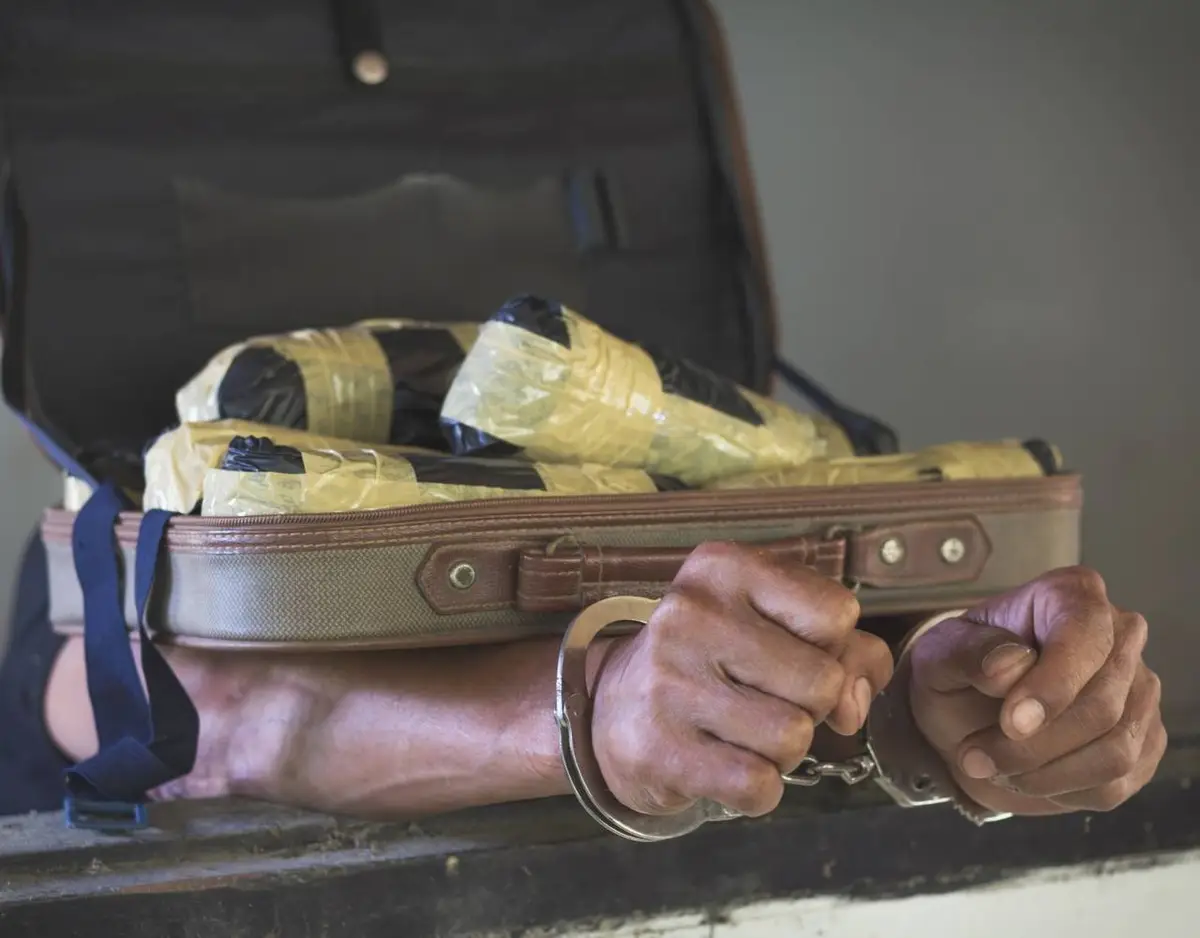
A drug charge in Illinois does not automatically mean a conviction. Cases get dismissed, reduced, or diverted every day in Cook County and across the state, but it happens because of specific problems with the evidence or a specific legal option the person qualifies for, not because a scary charge simply goes away. Ktenas Law was built by attorneys who spent years prosecuting these same cases for the State, and that background shapes how we look at yours.
This page explains how Illinois actually classifies drug charges, what the State has to prove, and the real paths that lead to a dismissal or a reduced charge.
Drug charges get dismissed for specific, recognized reasons, most often a problem with how the evidence was obtained. If the search was unlawful, a motion to suppress can keep what police found out of the case. Weight, lab results, and proof of possession are the other pressure points.
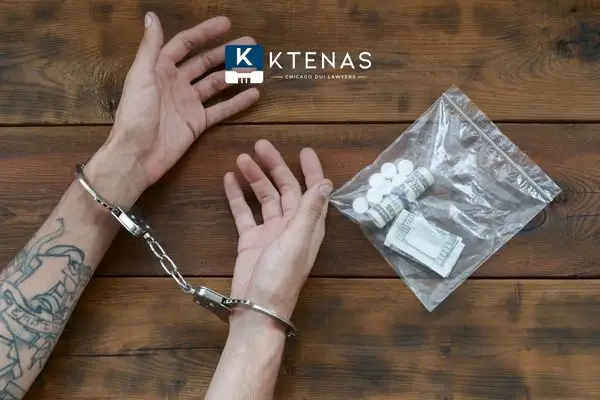
A drug charge gets dismissed for one of a few specific reasons. There is no shortcut and no guarantee, but there are real, recognized paths.
A problem with how the evidence was obtained. If police searched a person, a car, or a home without a valid warrant or a recognized exception to the warrant requirement, an attorney can file a motion to suppress that evidence under Illinois law (725 ILCS 5/114-12). If a judge grants the motion, the excluded evidence often cannot be used, and the State may not be able to move forward.
A gap in proving possession. The State has to prove the person knowingly possessed the substance. When drugs are found in a shared car, a shared apartment, or somewhere else the person did not have exclusive control over, proving that link can be harder than it looks on paper.
A problem identifying the substance itself. The State has to prove, through lab testing, that the substance is actually what they claim it is. Delays, chain of custody issues, or testing problems can affect that proof.
A qualifying first offense. Illinois law allows some first-time offenders charged with simple possession to complete probation without ever having a conviction entered against them (720 ILCS 570/410). If the terms are completed, the case is dismissed outright.
An attorney’s job is to look at the arrest, the search, the lab work, and the person’s record, and figure out which of these paths actually applies. None of them are automatic, and no attorney can promise a specific result before reviewing the facts.
Illinois treats different types of drug conduct differently, and the label on the charge changes what the State has to prove and what penalties apply.
Knowing which category a charge actually falls under matters, because the penalties below are very different depending on the answer.
Most drug prosecutions begin with a stop, a search, or a warrant. Our drug charge defense page explains why the search is usually the case.
Penalty ranges depend heavily on the substance and the amount. As of this writing, current Illinois law breaks down as follows:
Class 4 felony (the default for most possession charges). Possession of a controlled substance in an amount not covered by the larger-quantity tiers below is a Class 4 felony, punishable by 1 to 3 years in prison and a fine of up to $25,000 (720 ILCS 570/402(c); 730 ILCS 5/5-4.5-45). Probation of up to 30 months is an available alternative to prison for most people convicted of a Class 4 felony.
Class 1 felony (larger quantities of specific drugs). Possessing 15 grams or more of heroin, cocaine, morphine, or LSD, or 200 grams or more of certain other listed substances, is a Class 1 felony with mandatory prison ranges that scale with the amount, from 4 to 15 years at the lowest tier up to 10 to 50 years for the largest quantities, plus fines that can reach $200,000 or the street value of the drugs, whichever is higher (720 ILCS 570/402(a)).
Methamphetamine (its own scale). Under 5 grams is a Class 3 felony. Amounts between 5 and 15 grams are a Class 2 felony, 15 to 100 grams is a Class 1 felony, and 100 grams or more is a Class X felony, the most serious felony class short of first-degree murder (720 ILCS 646/60).
Anabolic steroids. Possession is a Class C misdemeanor for a first offense and a Class B misdemeanor for a second offense within two years (720 ILCS 570/402(d)).
Cannabis within legal limits. Not a crime for a resident 21 or older who stays within the possession limits described above.
Every case still depends on its own facts. Prior convictions, the location of the arrest, and other case-specific details can change what a person actually faces, which is exactly why a charge and a conviction are not the same thing.
Prosecutors cannot convict someone just because drugs were found near them. They have to prove, beyond a reasonable doubt, that the person:
Each of those elements is a potential point of attack for the defense, and each one is a fact question that depends entirely on the specifics of the arrest.

None of the following guarantees a dismissal or a particular outcome. They are the areas where a defense attorney’s review of the file tends to matter most.
An attorney can only evaluate which of these actually apply after reviewing the police reports, the lab results, and the person’s record.
Cook County’s Circuit Court runs Adult Drug Treatment Court programs(opens in a new tab) across its municipal districts, including the Markham and Bridgeview courthouses that serve much of the south suburbs. These programs combine judicial supervision with substance use treatment for people who qualify, as an alternative to a straight conviction.
Separately, Section 410 probation is available statewide to eligible first-time offenders charged with simple possession, regardless of which Illinois county the case is filed in. Eligibility for either option depends on the charge, the person’s criminal history, and the judge’s and prosecutor’s assessment of the case, so it is worth raising with an attorney as early as possible.

Our attorneys spent years on the other side of cases like this, as prosecutors in Cook County and Will County. That background changes how a case file gets reviewed. We know what a police report needs to include to support a stop and a search, what a lab report should show before the State relies on it, and where prosecutors are willing to negotiate an alternative to a conviction.
That does not mean a specific result is likely in any individual case. It means the review starts from an understanding of how the State builds these cases in the first place, and where they tend to fall apart.
A drug charge is the start of the case, not the end of it. Ktenas Law reviews the arrest, the search, and the evidence in every case we take on.
Free Case Review. Call (312) 800-1626 or reach out online.
It can be. Illinois law lets some first-time offenders complete probation under Section 410 of the Controlled Substances Act, and the case is dismissed once the terms are met.
Simple possession only requires proof someone knowingly had the substance. Possession with intent to deliver also requires evidence of intent to distribute, like quantity, packaging, or scales.
Not within legal limits. Illinois residents 21 and older may legally possess up to 60 grams of cannabis flower, 1,000 milligrams of THC in an infused product, or 10 grams of concentrate.
A warrantless search isn’t automatically illegal, since exceptions like consent apply, but it isn’t automatically legal either. An attorney can review the facts and file a motion to suppress where appropriate.
It lets certain first-time offenders complete probation on a simple possession charge and have the case dismissed without a conviction ever being entered. It’s only available once every four years.