Blood Alcohol Concentration (BAC) in Illinois
 11/06/2026
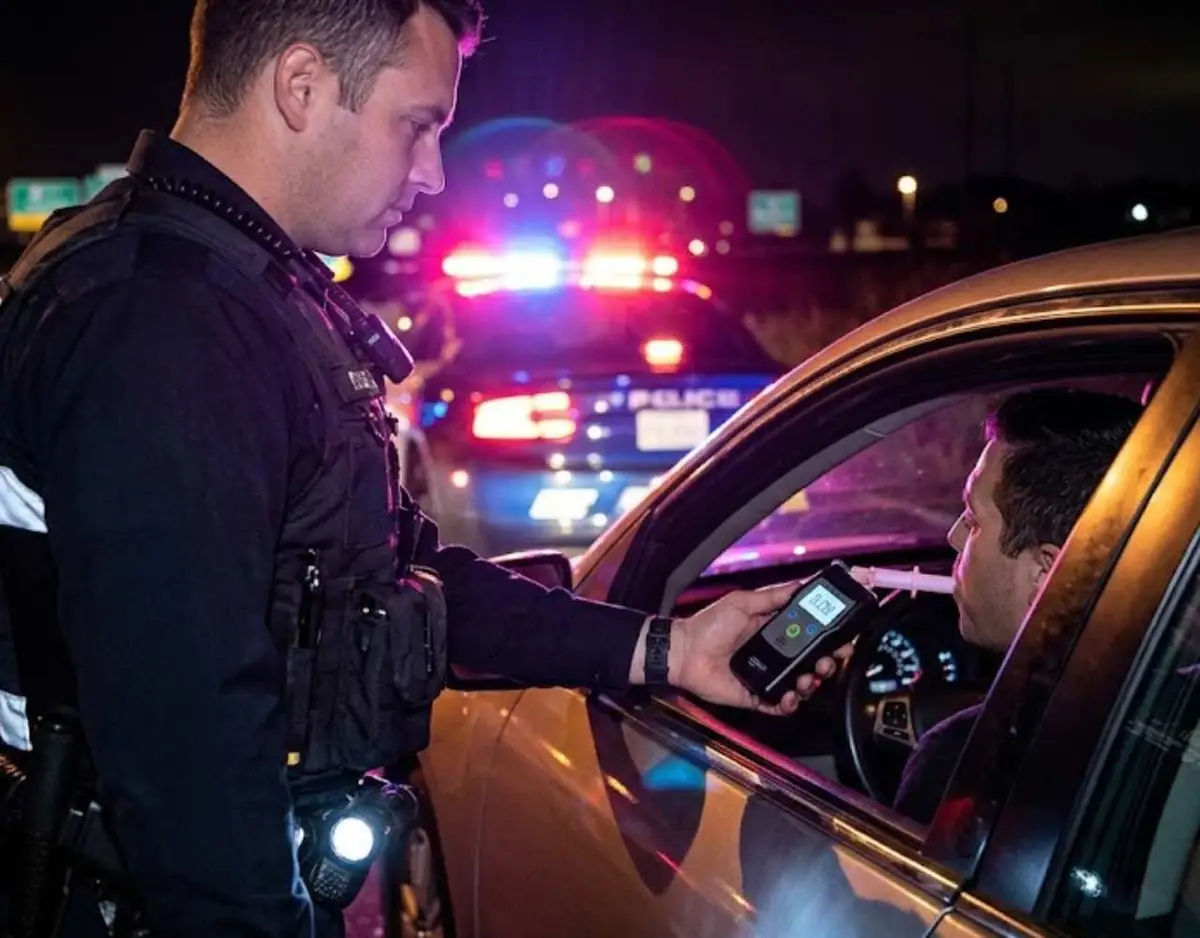
A DUI case starts the moment you’re pulled over. If an officer suspects you’re driving under the influence of alcohol or drugs, you’ll be asked to perform field sobriety tests and, in most cases, submit to a breath, blood, or urine test. If the officer believes there’s enough evidence, you’ll be arrested, processed, and released with a citation that lists your first court date.
From there, the case moves through Illinois’s court system on its own timeline, one that runs separately from the automatic license suspension the state also puts in motion. Most Illinois DUI cases take somewhere between a few months and just over a year to fully resolve, though the exact length depends on the charge, the county, and the choices you and your attorney make along the way. Ktenas Law, a criminal defense firm built entirely by former Illinois prosecutors, walks through what actually drives that timeline below.
A straightforward first DUI resolved by plea can finish in a few months. A contested case usually runs six months to a year or more. The difference is whether the stop, the testing, or the charge itself is being challenged, since that adds pretrial motions and possibly a trial.
A straightforward first-offense DUI with no aggravating factors, where the person accepts a plea early, can sometimes resolve within a few months of the arrest. A case where the defense contests the stop, the testing, or the charge itself typically runs six months to a year or more, since it has to move through pretrial motions and, if it doesn’t settle, a trial.
Two timelines run at the same time, and it helps to keep them separate. The criminal case moves through arraignment, pretrial motions, negotiation, and possibly trial. The administrative license suspension under Illinois’s implied consent law runs on its own statutory clock, and it doesn’t wait for the criminal case to finish. Understanding both is the difference between being surprised by a suspension and planning around it.
The citation you receive lists your first court date, called the arraignment. At arraignment, you enter a plea.
Most attorneys have a client enter a not guilty plea at this first hearing, even if a guilty plea may come later. That choice preserves time to review the evidence: the police report, dashcam or body camera footage, and the results of any chemical test.
After arraignment, the case typically moves through a series of additional court dates. During that stretch, the defense reviews evidence and negotiates with the State’s Attorney’s office. If you decide to contest the charge rather than accept an early plea offer, the next phase is pretrial motions.
A motion hearing gives your attorney the chance to cross-examine the arresting officer under oath. It’s also where details like these get pinned down:
If those motions don’t resolve the case, you have the right to a trial, either before a judge or a jury.
Most attorneys enter a not guilty plea at arraignment even when a plea may come later, because it preserves time to review the evidence. Our Illinois DUI process page walks through each stage.

Separately from the criminal case, Illinois’s implied consent law puts every licensed driver, and anyone driving on Illinois roads, on notice that they agree to chemical testing when an officer has reasonable grounds to believe they’re impaired. Refuse the test, or fail it, and the Secretary of State imposes a statutory summary suspension automatically, without a separate hearing, unless you act.
That suspension takes effect on the 46th day after you receive notice of it, regardless of what’s happening in your criminal case.
You get a longer window to challenge it: 90 days from the arrest to file a written request for a judicial hearing. But that filing window doesn’t pause day 46. The suspension still starts on schedule whether or not your hearing has happened yet, so acting early gives you the best chance to avoid a gap in your driving privileges.
Under 625 ILCS 5/6-208.1(opens in a new tab), the length depends on whether you failed the test or refused it, and whether you qualify as a first offender:
If you refuse testing as a first offender, Illinois law does not allow a Monitoring Device Driving Permit to drive to work, school, or treatment during that suspension.
Illinois defines a first offender as someone who has not had a DUI-related license suspension or revocation within the past five years. That five-year window is what controls how long your suspension runs.
It doesn’t erase an older DUI from your record, though. A prosecutor can still reference a decades-old conviction during sentencing on a new charge, even one that technically counts as a first offense for suspension purposes.
Several factors extend both the criminal case and the penalties a court can impose if you’re convicted.
Each of these adds legal complexity, and more complexity generally means more time in court before a case resolves.

How you handle the stop itself can shape how long your case takes to resolve. A few common missteps tend to complicate cases the most:
There’s a fourth one worth flagging separately, since it’s less about the stop and more about the attorney relationship: leaving out an old DUI arrest or conviction. Your attorney needs the full picture of your driving record early, no matter how long ago a prior case happened. A decades-old conviction can still surface and affect how the current case is handled, so leaving it out only slows things down once it surfaces on its own.
Assessing the strengths and weaknesses of a DUI case without legal training is difficult. DUI law changes frequently, and the facts of every case are different.
Many DUI defense attorneys, including our team, offer a free consultation. Bring your citation and any paperwork from the arrest, and come with a list of questions. Meeting in person, even briefly, is a useful way to gauge whether an attorney is the right fit before you commit.
Prosecutors’ offices often extend a standard plea offer on a straightforward first DUI with no aggravating factors. That offer tends to look the same whether you’re represented by a public defender, a private attorney, or no attorney at all. On paper, that can make hiring an attorney for a simple first offense seem unnecessary. In practice, a standard offer is usually a starting point, not a final word.
An experienced defense attorney reviews the state’s evidence for weaknesses: the basis for the stop, how the field sobriety tests were conducted, whether the chemical test followed the required procedure. Those weaknesses, if they exist, become leverage to negotiate from a stronger position.
Accepting the standard offer without that review means you may never find out whether a stronger option was available. There’s no way to know that without at least getting an attorney’s opinion first. A case that goes into negotiation on the wrong information also tends to take longer to resolve than one that starts with a clear strategy.

Ktenas Law is built entirely by former prosecutors, including Alex Ktenas, a former Cook County Assistant State’s Attorney. That background matters here specifically: our team has sat on the other side of the table during arraignments, motion hearings, and trial preparation. We know how a State’s Attorney’s office builds and moves a DUI case toward resolution.
If there’s a viable challenge to the stop, the testing, or the evidence in your case, we look for it early. The sooner a weakness is identified, the sooner it can shape negotiations, instead of surfacing late and adding months to the process.
If no such challenge exists, we discuss the options honestly, including what a negotiated resolution might look like. We won’t promise an outcome no attorney can guarantee.
To talk through your specific timeline and what to expect at each stage, contact Ktenas Law today at (312) 800-1626 for a free case review.
A first offense with no aggravating factors and an early plea can sometimes resolve within a few months. A contested first offense that goes through pretrial motions or trial typically takes longer, often six months to a year.
No. The statutory summary suspension runs on its own schedule under 625 ILCS 5/6-208.1, starting on the 46th day after notice. It can end before, during, or after the criminal case resolves, depending on its length and when it started.
It depends on whether you failed or refused testing and whether you qualify as a first offender under 625 ILCS 5/11-500. A first offender who refused testing is not eligible for a Monitoring Device Driving Permit during the suspension. An attorney can review your specific situation and explain what, if anything, is available to you.
For your license suspension length, Illinois looks at whether you’ve had a DUI-related suspension within the past 5 years (625 ILCS 5/11-500). For your criminal case, an older conviction can still be part of your record and can come up during sentencing discussions, even if it falls outside that 5-year window.
A refused chemical test, a blood alcohol concentration of 0.16 or higher, a crash, a passenger under 16 in the vehicle, or a third DUI charge (aggravated DUI) all add legal complexity that tends to extend a case’s timeline.
No, but an unrepresented person has no way to know whether a standard plea offer reflects the strongest available option in their specific case. A free consultation with a defense attorney can clarify that before you decide.