

DUI Arrest in Will County: What Happens Before Your Joliet Court Date
 11/03/2026
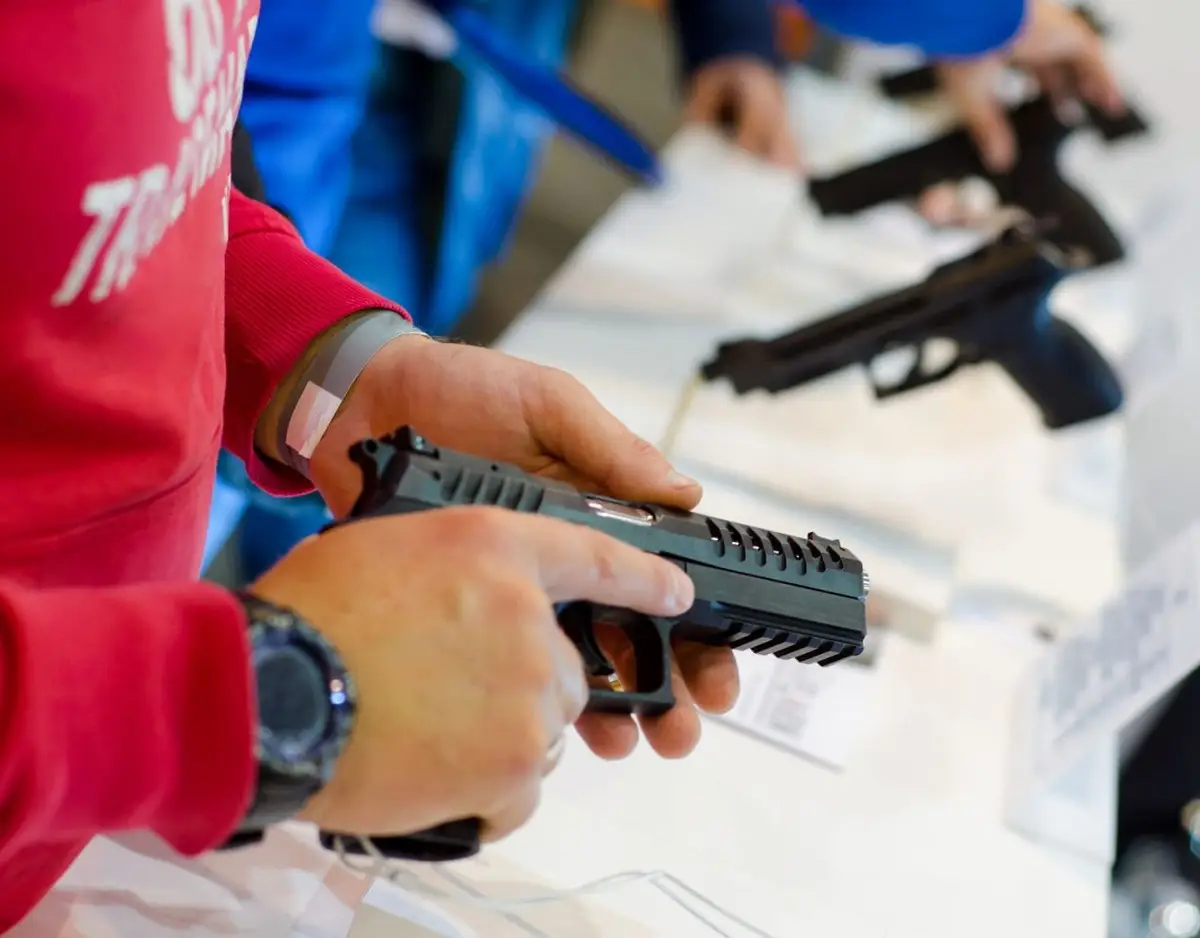
A gun charge in Illinois can mean a misdemeanor and a fine, or it can mean a felony with a mandatory prison range. Which one you’re facing depends on details that are easy to miss unless you already know Illinois weapons law: what kind of firearm was involved, whether it was fired, whether you had a valid Firearm Owner’s Identification (FOID) card or Concealed Carry License (CCL), and whether this is a first offense.
Illinois requires a FOID card to possess a firearm or ammunition at all, and in most cases a separate Concealed Carry License to carry it outside your home. Missing either one changes what you’re charged with. Cook County prosecutors treat weapons cases seriously, and the stakes go up fast once a charge crosses from misdemeanor into felony territory.
If you or someone you love was arrested on a weapons charge in Chicago or the south suburbs, knowing which category the charge falls into is the first real step toward understanding what’s ahead. Two of our founding attorneys at Ktenas Law spent years as Cook County prosecutors, including felony courtrooms at the Markham courthouse, before they started defending the people they used to prosecute.

Often yes, but not automatically. A first-time unlawful possession charge involving a long gun can be a Class A misdemeanor. Handgun possession, carrying without a valid FOID card or CCL, reckless discharge, and aiming a discharge at a person all move into felony territory.
Often, yes, but not automatically. Illinois splits firearm offenses across a real spectrum. A first-time unlawful possession charge involving a long gun (not a handgun) can be a Class A misdemeanor. Unlawful possession of a handgun, carrying a gun without a valid FOID card or CCL, discharging a firearm recklessly, aiming a discharge at a person or building, and possessing a firearm you know is stolen are all felonies, and Illinois felony sentencing works on a mandatory range rather than a simple maximum. That means a judge generally can’t go below the statutory floor even for a sympathetic first offense. The sections below walk through the charges we see most often and where each one lands.
Under 720 ILCS 5/24-3.1(opens in a new tab), a person unlawfully possesses a firearm or ammunition when they:
The law carves out an exception for minors doing lawful shooting, hunting, or fishing under the Wildlife Code or Fish and Aquatic Life Code.
The difference between a misdemeanor and a felony here is often the type of gun and the paperwork behind it. Our gun charge defense page covers the classes.
The classification turns on the type of firearm. Under the same statute, unlawful possession of a firearm other than a handgun (or of ammunition) is a Class A misdemeanor, punishable by up to 364 days in county jail and a fine of up to $2,500. Unlawful possession of a handgun is a Class 4 felony, carrying 1 to 3 years in the Illinois Department of Corrections and a fine of up to $25,000. Each firearm or round of ammunition involved counts as a separate violation, so multiple items can mean multiple charges.
This is one of the most common gun charges in Chicago, and it wasn’t in earlier versions of this page. Under 720 ILCS 5/24-1.6(opens in a new tab), aggravated unlawful possession of a weapon applies when someone carries an uncased firearm (loaded, or unloaded with the ammunition immediately accessible) in a vehicle or in public, and either lacks a valid FOID card, lacks a valid Concealed Carry License, or falls into one of several other aggravating categories the statute lists, such as being under 21 with a handgun or having an active order of protection against them.
A first offense is generally a Class 4 felony, punishable by 1 to 3 years in prison. A second or subsequent offense, or a first offense by someone with a prior felony conviction, escalates to a Class 2 felony, punishable by 3 to 7 years. If the person is also wearing or possessing body armor and has no valid FOID card, the offense becomes a Class X felony. Because the classification depends on which specific factors apply, two people arrested in similar-looking traffic stops can end up facing very different charges.

Under 720 ILCS 5/24-1.5(opens in a new tab), reckless discharge of a firearm happens when someone fires a gun in a way that endangers another person’s safety, without necessarily aiming at anyone. Firing into the air during a celebration in a populated area is a common real-world example. If a passenger in a moving vehicle fires recklessly with the driver’s knowledge and consent, the driver can also be held accountable. Reckless discharge is a Class 4 felony, carrying 1 to 3 years in prison and a fine of up to $25,000. This section doesn’t apply to a peace officer performing official duties.
720 ILCS 5/24-1.2(opens in a new tab) defines aggravated discharge of a firearm, and it covers deliberate targeting rather than general recklessness: firing at or into a building the shooter knows or should know is occupied (from outside that building), or firing in the direction of a person or a vehicle the shooter knows or should know is occupied. Either of those is a Class 1 felony, carrying 4 to 15 years in prison and a fine of up to $25,000.
The penalties climb sharply from there. If the same conduct happens on or near school grounds, at a school-related activity, or on a school transport vehicle, it becomes a Class X felony. And if the target is a peace officer, firefighter, correctional employee, emergency responder, teacher on school grounds, or emergency management worker acting in their official duties, the statute classifies it as a Class X felony carrying 10 to 45 years, regardless of location.
Under 720 ILCS 5/24-3.8(opens in a new tab), a person commits this offense when they possess a firearm they know to have been stolen or converted, while not being entitled to possess it. Knowledge matters here: the law allows a judge or jury to infer that someone knew a gun was stolen if its serial number had been removed or altered. Possession of a stolen firearm is a Class 2 felony, carrying 3 to 7 years in prison and a fine of up to $25,000.
Illinois created a real second chance here, and it’s recent enough that a lot of people facing these charges don’t know it exists. Under 730 ILCS 5/5-6-3.6(opens in a new tab), the First Time Weapon Offense Program lets a court, with the consent of both the defendant and the State’s Attorney, place an eligible defendant into a diversion program instead of entering a conviction. It applies only to unlawful possession or aggravated unlawful possession of a weapon charges punishable as a Class 4 felony or lower, and it isn’t available to anyone with a disqualifying history involving violence, a prior order of protection, or a previous completion of the program.
The program runs 6 to 24 months and can include conditions like counseling, community service, or staying employed. Complete it, and the court dismisses the case entirely rather than entering a conviction. As of a change effective January 1, 2026, someone who successfully completes the program can also apply for a FOID card afterward, as long as they’re otherwise eligible. This is exactly the kind of option worth raising early with an attorney, since eligibility and the State’s Attorney’s willingness to consent are case-by-case, not automatic.

None of the charges above are automatic just because a gun turned up. Prosecutors still have to prove every element beyond a reasonable doubt, including that the person knowingly possessed, carried, or discharged the firearm, and whatever specific fact elevates the charge, such as the absence of a valid FOID card or CCL, that a building or vehicle was known to be occupied, or that the firearm was known to be stolen. Where a firearm was found, who had access to it, and what the person actually knew at the time are often the real battlegrounds in these cases, not just whether a gun existed.
A charge is not a conviction, and the right defense depends on the specific facts, the exact charge, and the court handling the case. Depending on how the arrest happened, a defense may focus on whether the stop or search that led to the firearm being found was constitutional, whether the state can actually prove the person knew about the firearm or its status, whether FOID and CCL records were pulled and verified correctly, or how the firearm was handled and stored as evidence. An attorney can review the police reports, the charging documents, and the FOID/CCL history to map out what’s realistically available in a given case.
Felony gun cases arising in Chicago typically move through the George N. Leighton Criminal Courthouse at 26th and California. Many south suburban Cook County felony matters, including a large share of weapons cases, are charged out of the Markham courthouse, where Nick Ktenas spent years as a felony division prosecutor before joining the defense side. Cases arising in Will County communities run through the Will County courthouse, where Lauren Ktenas previously worked as an Assistant State’s Attorney.
Gun cases often turn on details the police report doesn’t fully capture: how a stop was justified, whether a FOID or CCL check was run correctly, or how the state plans to prove knowledge. Attorneys who spent years building these cases from the prosecution side know what evidence the state relies on and where it tends to be weakest. That’s the perspective Alex, Nick, and Lauren Ktenas bring to every gun charge that comes through the firm, from a first-time possession case to a felony discharge charge.

If you or someone you love is facing a weapons charge in Chicago, Orland Park, Tinley Park, Homewood, Frankfort, or the surrounding communities, the sooner an attorney reviews the arrest, the more options are usually on the table. Call (312) 800-1626 for a Free Case Review, or submit a request through our contact page.
Not always. It depends on the specific charge and the firearm involved. A first-time unlawful possession charge involving a long gun can be a misdemeanor, while unlawful possession of a handgun or carrying without a valid FOID card or CCL is typically a felony from the first offense.
Reckless discharge covers firing a gun in a way that endangers someone’s safety without necessarily aiming at a person. Aggravated discharge covers deliberately firing at or into an occupied building, or in the direction of a person or occupied vehicle, and carries substantially harsher penalties.
No. A FOID card covers lawful possession, but it doesn’t authorize carrying a loaded, uncased firearm in public without a separate Concealed Carry License, and it doesn’t change the law around discharging a firearm recklessly or aiming it at someone.
In some cases, yes. The First Time Weapon Offense Program allows eligible first-time, non-violent defendants facing certain possession charges to complete a diversion program instead of a conviction, with the case dismissed on successful completion. Eligibility depends on the specific charge and the person’s history, so this isn’t automatic.