


If I Don't Take a Breathalyzer, Won't My License Be Suspended?
 10/15/2026
Being pulled over by the police can be stressful, especially if it is your first traffic stop. For many people, an encounter with law enforcement happens during routine driving situations such as suspected traffic violations or minor driving issues. While many stops end with a warning or citation, others can involve further investigation, and in some cases, it may be helpful to speak with a traffic ticket lawyer to understand your options.
Even when a stop begins as a routine incident, it can escalate if a driver does not understand their rights. Drivers are protected by several constitutional rights, including the First Amendment, Fourth Amendment, and Fifth Amendment, during interactions with law enforcement officers. Understanding these protections can help drivers stay calm, make informed decisions, and avoid unnecessary legal trouble during a traffic stop.
You must hand over your license, registration, and proof of insurance. Almost everything else is optional. You can decline to answer questions, and you can refuse consent to a search. Saying no to a search is not an admission of anything, and it does not give an officer a reason to search anyway.
A police officer cannot stop a vehicle without a reason. In most cases, officers must have reasonable suspicion that a driver has violated traffic laws before initiating a traffic stop.
Reasonable suspicion means the officer has specific observations suggesting that illegal activity may be occurring. For example, an officer may believe a driver was speeding, failing to signal, or driving erratically.
Common reasons officers pull drivers over include:
Drivers usually realize they are being stopped when they see flashing police lights and hear a siren from the patrol vehicle.
In some cases, a stop may still be considered lawful even if the officer was mistaken about the law. Courts have ruled that a stop can remain valid if the officer reasonably believed a violation occurred.

If you see flashing police lights behind your vehicle, remain calm and begin slowing down safely. Turning on your hazard lights signals to the police officer that you understand you are being pulled over.
Drivers should move their vehicle to a safe location, typically on the side of the road. If the immediate area is unsafe or poorly lit, it is usually acceptable to continue driving slowly until a safer location is available.
Once stopped:
Officers are trained to watch for sudden movements during a traffic stop, so remaining still and calm helps reduce tension during the encounter.
During a traffic stop, law enforcement will typically ask for three documents:
Drivers are legally required to provide these documents when requested by a police officer.
Learn More: Driving Without Insurance in Illinois
Many drivers store their registration and insurance documents in the glove compartment while keeping their license in a wallet. If the officer asks for them, let the officer know where the documents are before reaching for them.
Providing these documents does not mean admitting responsibility for a violation. It simply allows the officer to verify your identity and confirm that the vehicle is properly registered.
After receiving your documents, the officer may return to their patrol car to check your driving history. The officer may then decide whether to issue a warning, a citation, or take additional action.
During this time, the officer may ask questions about the stop or request an explanation of what happened. Drivers should remember that they are only required to provide identification and vehicle documents, and their constitutional rights still apply during the encounter.
After checking your identification, driver’s license, and other documents, a police officer may begin asking questions. These questions may include where you are coming from, where you are going, or whether you were aware of the reason for the traffic stop.
Drivers are generally not required to answer most investigative questions during a traffic stop. The Fifth Amendment (opens in a new tab) protects your right not to make statements that could later be used against you in court. While you must provide your license, registration, and proof of insurance, answering additional questions is often optional.
If you choose not to answer questions, remain respectful. A simple statement such as “I prefer not to answer questions” communicates your decision without escalating the situation.
Even if you believe the stop was unfair, arguing with officers on the roadside rarely helps. Disputes about the stop or the officer’s decisions are better handled later through the legal process with the help of an attorney or lawyer.

During some traffic stops, law enforcement officers may ask for permission to search your vehicle. Many people feel pressured to agree, even when they are unsure whether the search is necessary.
The Fourth Amendment (opens in a new tab) protects individuals from unreasonable searches and seizures. In most situations, law enforcement must have one of the following before searching a vehicle:
If an officer asks to search your vehicle, you have the right to refuse consent. Politely stating that you do not consent to a search preserves your rights.
In some situations, officers may still conduct a search without permission. For example, if illegal items are visible inside the vehicle, or if a drug-sniffing dog alerts officers to the presence of drugs, this may establish probable cause for a search.
If a search occurs and you believe it was unlawful, that issue can later be addressed in court with the help of a lawyer or criminal defense attorney.
Recording interactions with law enforcement is generally legal in Illinois. Many drivers choose to record a traffic stop using a cell phone or smartphone.
Drivers have the right to document police interactions as long as the recording does not interfere with the officer’s duties. Recording can help capture the details of an incident and may serve as useful evidence if questions arise later.
Many police departments already use body-worn cameras, commonly called body cams, as well as vehicle dashcams. These cameras often record traffic stops and may become part of the official record of the encounter.
In addition, nearby surveillance cameras may capture parts of the interaction depending on the location of the stop.
If an officer suspects impaired driving, the traffic stop may turn into a DUI investigation. During these situations, law enforcement officers may ask a driver to perform a field sobriety test.

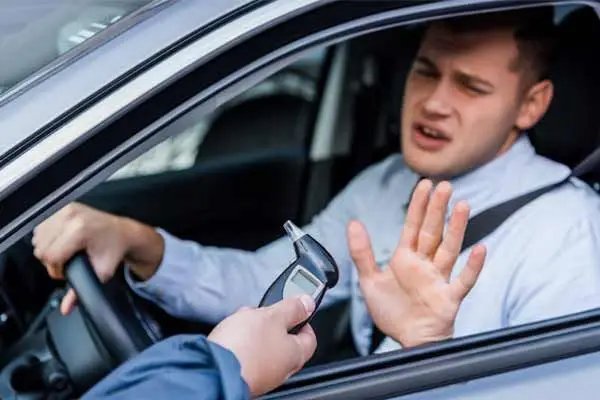
A field sobriety test usually involves balance or coordination exercises intended to help officers determine whether a driver may be impaired. These tests are voluntary in Illinois. Officers may also request a chemical test, such as a breath or blood test, later in the process.
If the stop ends in an arrest, what happens next is a DUI case, and our Chicago DUI defense page explains how those are fought. If this is your first one, start with what a first DUI carries.
In some areas, sobriety checkpoints or roadblocks may be used to check drivers for signs of impairment. During these situations, drivers may be briefly lawfully detained while officers conduct the checkpoint.
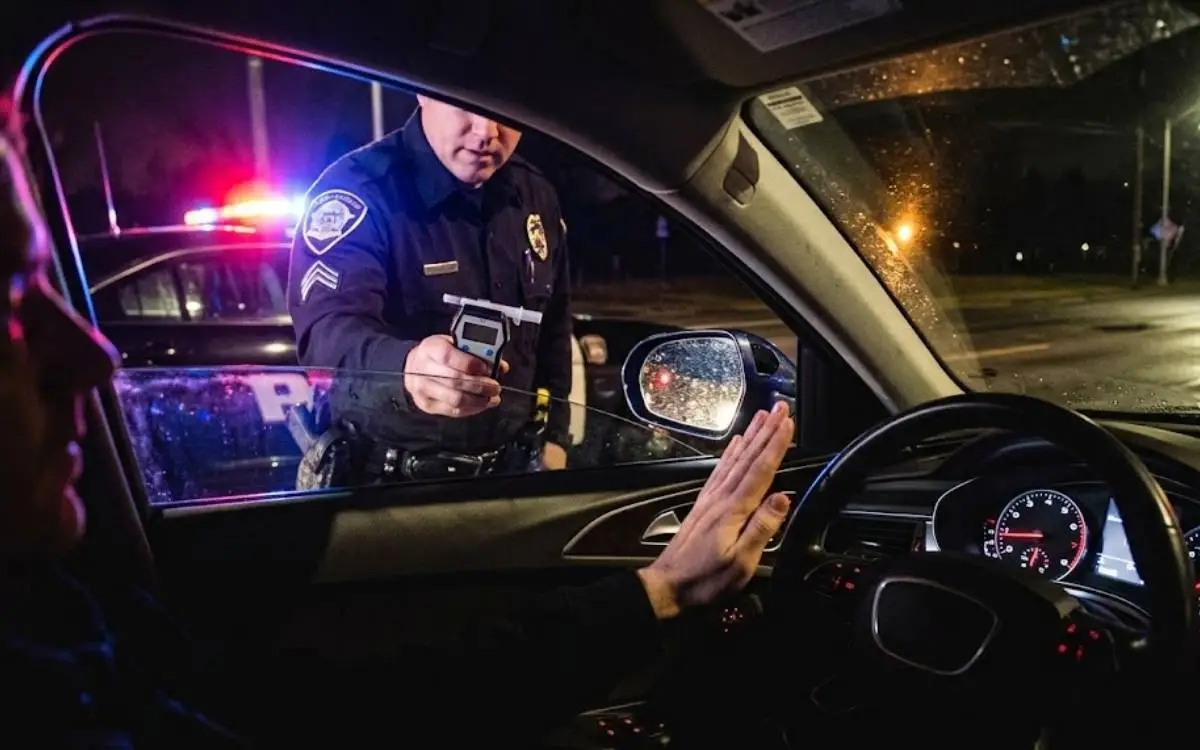
Refusing a chemical test carries its own penalty, separate from the criminal case. Under 625 ILCS 5/11-501.1 (opens in a new tab), a statutory summary suspension of your license begins on the 46th day after the notice.
If a traffic stop results in an arrest, it is important to remain calm and follow instructions from law enforcement officers. Resisting or arguing can lead to additional charges and make the situation more difficult.
After an arrest, you have the right to request a lawyer or attorney before answering questions. Asking for consultation with legal counsel helps protect your rights during the legal process.
Following an arrest, a person may go through several steps, including booking, possible bail, and a future court appearance. These procedures vary depending on the circumstances of the case and the law enforcement agency involved.
If you believe an officer acted improperly during the stop, you can file a complaint. In Chicago, misconduct complaints against CPD officers go to the Civilian Office of Police Accountability. In the suburbs, they go to that department or the village. Tell your attorney too, because how the stop was conducted often matters to the case itself.

Being pulled over by police can be stressful, but understanding your rights can help you stay in control of the situation. Knowing what you are required to do, when you can remain silent, and how to handle searches can make a meaningful difference in protecting your driver’s license and avoiding unnecessary legal trouble.
If your traffic stop resulted in a citation, investigation, or arrest, taking action quickly is critical. Call Chicago DUI Lawyers at (312) 800-1626 to discuss your situation and get clear guidance on your next steps. Speaking with a traffic ticket lawyer early can help you protect your record, your driving privileges, and your future.
When you are pulled over during a traffic stop in Illinois, you have several constitutional rights. You must provide your driver’s license, vehicle registration, and proof of insurance when requested by a police officer, but you generally have the right to remain silent under the Fifth Amendment. You also have the right to refuse consent to a search of your vehicle unless law enforcement officers have probable cause or a warrant.
In most situations, law enforcement cannot stop a civilian from recording police interactions. Recording officers during a traffic stop is generally protected under the First Amendment, as long as the recording does not interfere with the officer’s duties. Many drivers use a cell phone or smartphone to document an incident, and officers themselves often use body cams and dashcams during encounters.
If you are lawfully detained during a traffic stop, you are required to provide identification. Drivers must present their driver’s license, registration, and proof of insurance when requested by a police officer. However, beyond providing identification, you typically are not required to answer additional questions.
No. Field sobriety tests are voluntary, and declining one is not a crime. A chemical test is different: refusing that triggers a statutory summary suspension of your license. If a stop has already turned into an arrest, our DUI defense page walks through what comes next.
Tell your attorney immediately and write down everything you remember while it is fresh. A search that went past what the law allowed can be challenged in a pretrial motion, and if the court agrees, what was found may be kept out of your case entirely.
That depends on where you were stopped. Chicago arrests usually start at a branch court, and suburban stops go to the district courthouse covering that area. Our Cook County districts guide matches an address to a courthouse.