


How Will a Criminal Record Affect Finding a Job in Illinois?
 10/11/2026
A field sobriety test is one of the first pieces of evidence an officer builds during a DUI stop, and one of the easiest to get wrong. In Illinois, police rely on three tests: the Horizontal Gaze Nystagmus test, the Walk and Turn test, and the One-Leg Stand test. Officers use these tests to decide whether they have probable cause for a DUI arrest, not to prove intoxication on their own.
If you were asked to perform these tests during a traffic stop in Cook, Will, or DuPage County, what happened next, and how well the officer followed protocol, can matter as much as the result itself. Ktenas Law is built entirely around Illinois DUI defense, and our attorneys spent years on the other side of these cases as Cook County prosecutors before founding the firm.
No. Field sobriety tests are voluntary under Illinois law. This surprises a lot of drivers, because officers rarely mention it during a stop.
Illinois’ implied consent law, found at 625 ILCS 5/11-501.1(opens in a new tab), only applies to chemical tests: breath, blood, urine, or other bodily substance testing done after an arrest. It does not require anyone to perform physical field sobriety tests during the roadside investigation that happens before an arrest decision is made. Refusing a field sobriety test does not, by itself, trigger the automatic license suspension that comes with refusing a chemical test after arrest.
That does not mean refusal is consequence-free. An officer who cannot get a driver to perform field sobriety tests will typically rely more heavily on other observations, like the smell of alcohol, slurred speech, or how the stop itself unfolded, to decide whether probable cause for an arrest exists. Refusing the tests does not prevent an arrest. It simply means the officer has less standardized evidence to work with, and less for a defense attorney to later challenge in court.
Learn More: Find our information about your
Illinois State Police and local departments across Cook, Will, and DuPage Counties train officers to administer field sobriety testing according to the NHTSA’s Standardized Field Sobriety Test(opens in a new tab) (SFST) protocol. That word, standardized, matters. If an officer skips steps, gives instructions incorrectly, or scores a clue that the manual does not call for, the results can be challenged.
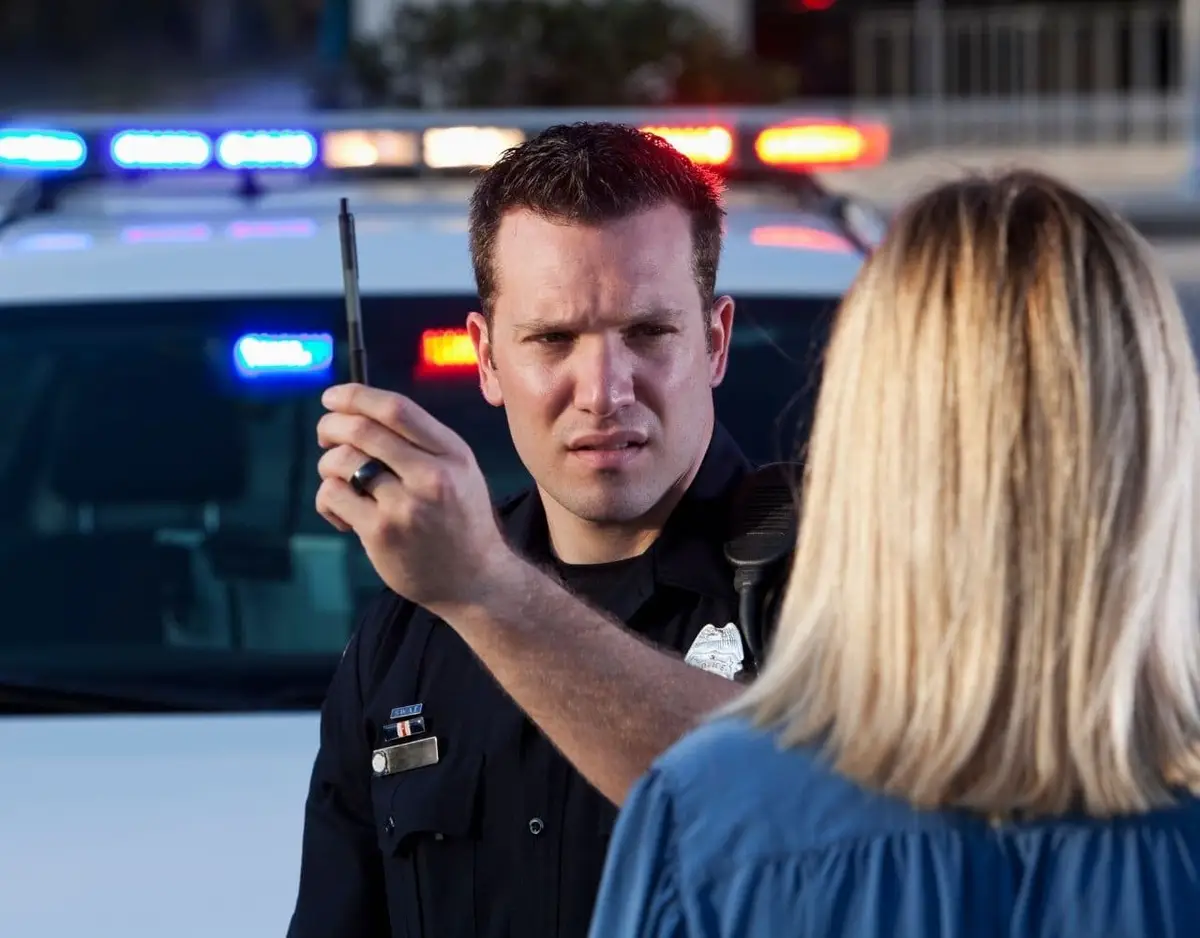
The HGN test looks at involuntary eye movement. Everyone’s eyes jerk slightly at extreme side angles, but alcohol exaggerates that involuntary bouncing and makes it happen at a smaller angle. The officer moves a pen or flashlight side to side and watches for three things in each eye: whether the eye can follow smoothly, whether jerking is distinct at maximum deviation, and whether the jerking starts before a 45-degree angle.
According to NHTSA-sponsored validation research, the HGN test correctly identified impairment in roughly 77 percent of cases when properly administered, making it the most reliable of the three individual tests. It is also the most technical, which means small errors in how an officer holds the object, positions it, or times the passes can distort the result.
The Walk and Turn test is a divided-attention exercise. The officer explains and demonstrates the test, then asks the driver to take nine heel-to-toe steps along a real or imaginary line, turn in a specific way, and take nine steps back while counting each step aloud and keeping their arms at their sides.
Officers are trained to watch for specific clues: losing balance during instructions, starting too soon, stopping mid-walk, missing heel-to-toe contact, stepping off the line, raising arms for balance, turning incorrectly, or miscounting steps. NHTSA-sponsored research puts this test’s individual accuracy at around 68 percent. A driver in heels, on a sloped shoulder, or on broken pavement is working against the test itself before alcohol ever enters the picture.
For the One-Leg Stand, the driver is asked to raise one foot about six inches off the ground and count aloud, in a specific pattern, for 30 seconds while keeping their arms down. Officers score clues like swaying, hopping, using arms for balance, or putting the foot down early.
This is the least reliable of the three tests individually, with NHTSA-sponsored research placing its accuracy at around 65 percent. Balance issues, inner-ear conditions, an old knee or back injury, or simply being nervous in front of a police officer can all produce the same clues the test is designed to catch. The three tests are meant to be used together, not relied on individually, which is exactly why officer training and correct administration carry so much weight later in court.
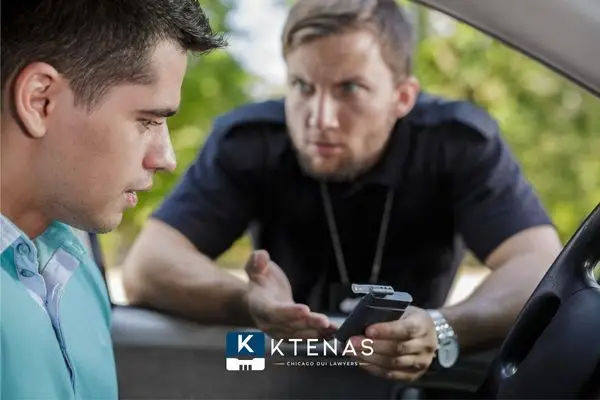
Refusing field sobriety tests and refusing a chemical test are two different decisions with two very different consequences under Illinois law, and officers do not always explain the distinction clearly at the roadside.
Chemical test refusal, governed by the implied consent law, triggers an administrative license suspension processed through the Illinois Secretary of State. That suspension takes effect on the 46th day after the notice is given, under 625 ILCS 5/11-501.1(g)(opens in a new tab), regardless of how the underlying criminal case turns out. Field sobriety test refusal does not trigger this statutory summary suspension on its own, because the implied consent statute does not reach field sobriety testing.
That said, a driver arrested for DUI still faces the criminal side of the case separately from any administrative license suspension. A first DUI in Illinois is a Class A misdemeanor under 625 ILCS 5/11-501(c)(1). A third violation escalates to a Class 2 felony under 625 ILCS 5/11-501(d)(2)(B). Whether or not field sobriety tests were performed, an experienced Illinois DUI defense attorney should be brought in early to evaluate both the administrative and criminal tracks of the case.
Learn More: What to do if you’re asked to take a
Field sobriety tests are designed to detect alcohol impairment, but they measure balance, coordination, and eye movement, things that plenty of sober people struggle with under stress. A number of real-world factors can produce a failing score with no alcohol involved at all:
None of this means the tests are useless. It means the results depend heavily on officer observations, correct administration, and conditions at the scene, all of which are open to challenge.
Modern DUI stops rarely rely on an officer’s memory alone. Dashcam footage, body-worn camera footage, and the officer’s own written report are typically the first things a defense attorney requests. Video footage can show whether the instructions matched NHTSA’s approved script, whether the officer demonstrated the test correctly, and whether the roadway, lighting, and weather matched what the officer described afterward.
An officer’s police training records and SFST certification history are also fair game. If an officer administered a test outside of NHTSA protocol, or was not properly trained or recertified, that becomes a real point of challenge rather than a technicality. Witness statements, if any bystanders were present, and the officer’s own notes at the time of the stop round out the record an attorney reviews before deciding how to approach the case.
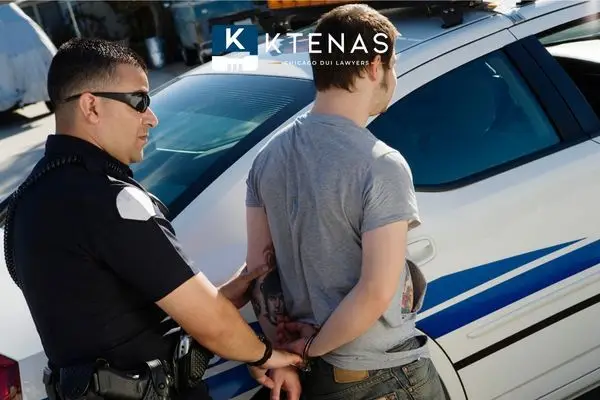
Illinois courts have specifically addressed how much weight field sobriety test results can carry, and it is not unlimited.
In People v. Basler, 193 Ill. 2d 545 (2000)(opens in a new tab), the Illinois Supreme Court held that HGN testing was not a “novel” scientific technique requiring a full Frye hearing in every case, but the court was clear that a defendant can still challenge the test if there is evidence it was not scientifically sound, and that the State still carries the burden of showing the officer was properly trained and administered the test correctly.
The Illinois Supreme Court went further in People v. McKown, 226 Ill. 2d 245 (2007) and 236 Ill. 2d 278 (2010). The court held that HGN results are scientific evidence that requires interpretation grounded in medicine, ophthalmology, and optometry, not in law enforcement’s own experience administering the test, and that HGN results are only admissible when the officer performed the test according to NHTSA protocol. In McKown’s own case, that requirement was not met, and the improperly admitted HGN evidence was significant enough to warrant a new trial.
The practical takeaway: field sobriety test evidence is not automatically bulletproof just because an officer administered it. Illinois’ own Supreme Court has twice sent DUI evidence back for exactly that reason.
Contact: Talk to a DUI defense attorney as soon as possible if this is your
Field sobriety test results are not the end of the conversation; they’re the starting point for one. Our attorneys review dashcam and body camera footage, the officer’s training and certification records, and the specific way each test was administered against NHTSA’s own manual, because that is exactly where Illinois courts have found these cases fall apart.
Alex Ktenas built this practice on that kind of detail. Before founding Ktenas Law, he served as a Cook County Assistant State’s Attorney in both the Chicago and Markham courthouses, and he has spent years since studying NHTSA’s field sobriety protocols from the defense side. He is a Super Lawyers Rising Star and serves as President of the South Suburban Bar Association.
Depending on how the stop was handled and what the footage shows, that review can lead to a motion to suppress the test results, a stronger position in plea negotiations, or a case that is ready to go to trial. Every case depends on its own facts, and no outcome can be promised in advance, but a field sobriety test that was not administered correctly is often the clearest opening a defense has.
Call (312) 800-1626 for a Free Case Review, or reserve a Priority Case Review if your statutory summary suspension deadline is approaching.
No. Field sobriety tests are voluntary. Illinois’ implied consent law only applies to chemical tests like breath, blood, or urine testing after an arrest, not to roadside field sobriety testing.
Yes. An officer can still make an arrest based on other observations, such as driving behavior, appearance, and speech. Refusing the test limits the officer’s standardized evidence, but it does not prevent an arrest.
NHTSA-sponsored research puts individual accuracy at roughly 77 percent for HGN, 68 percent for the Walk and Turn test, and 65 percent for the One-Leg Stand test. Medical conditions, medications, weather, and road conditions can all affect the result independent of alcohol.
Not on its own. The automatic statutory summary suspension applies to chemical test refusal under the implied consent law, not to field sobriety test refusal.