Felony DUI in Will County: How Aggravated DUI Cases Move Through Joliet
 11/17/2026
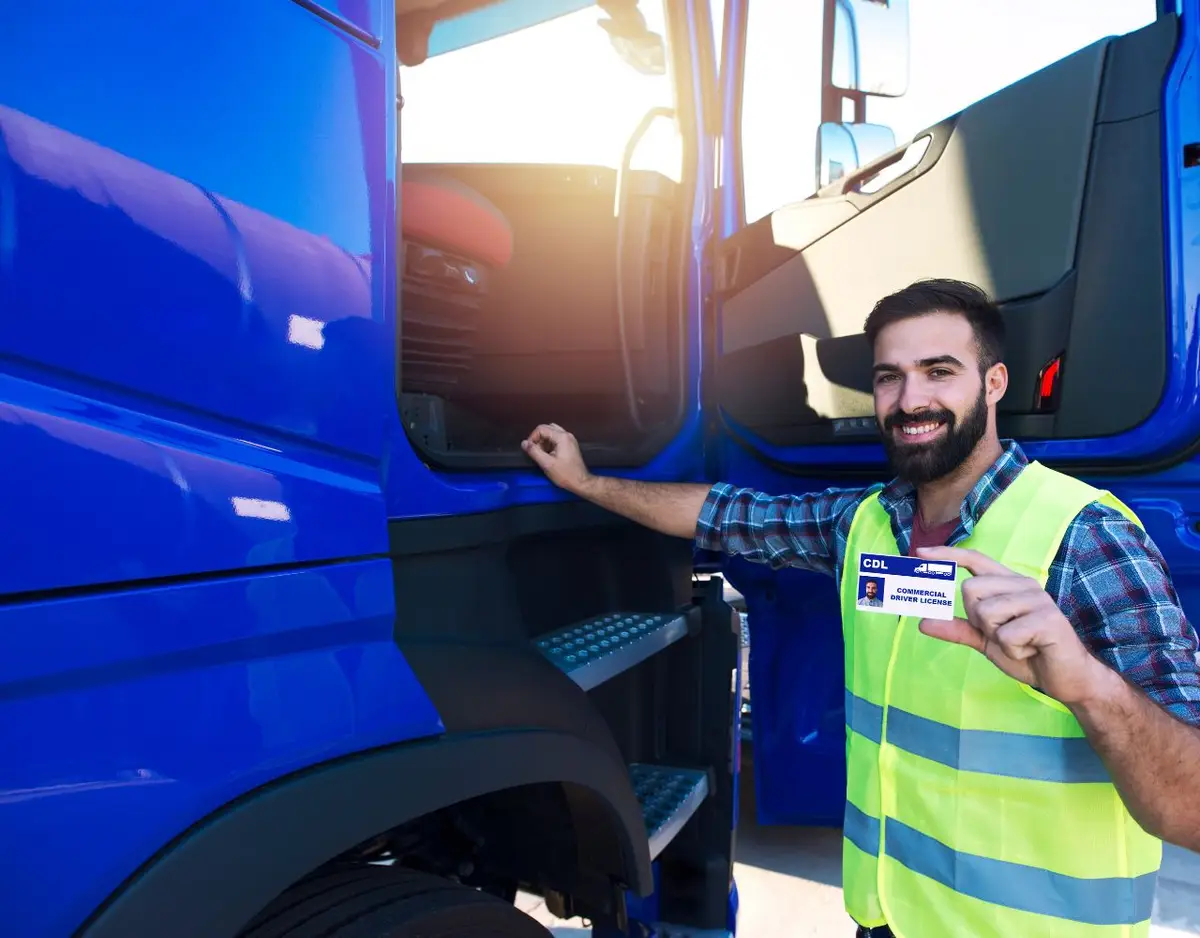
A speeding ticket costs a regular driver a fine and a few points. For a commercial driver, the same ticket can end a paycheck. Illinois and federal law track certain traffic violations separately for CDL holders, and the penalties stack in ways that catch a lot of drivers off guard.
If you drive for a living and you were just cited or arrested, the clock on your commercial driving privileges may already be running. Ktenas Law represents commercial drivers across Cook and Will County who are facing citations, disqualification notices, or a pending criminal charge tied to their CDL.

Every ticket a CDL holder receives creates two separate records. One is the ordinary traffic case. The other is a state and federal disqualification review that runs independently of the court, governed by 49 C.F.R. 383.51. Paying a ticket quietly can trigger the second.
Every traffic stop involving a CDL holder creates two separate records. The first is the regular ticket that goes on your driving record like anyone else’s. The second is a federal and state disqualification review that runs independently of the court case.
That second track is governed by 49 C.F.R. § 383.51(opens in a new tab) and mirrored in Illinois law at 625 ILCS 5/6-514(opens in a new tab). It does not care whether you were driving your truck or your own car at the time. Certain violations trigger a CDL consequence no matter which vehicle you were in when you were cited.
This is the piece most drivers miss. A conviction can leave your regular license untouched while still disqualifying you from driving commercially, or force a suspension of your personal license that pulls your CDL down with it.
Illinois law splits CDL-affecting violations into two tiers, and the tier determines how severe the consequence is.
Major offenses and serious violations are two different tiers with two different consequences. Our CDL defense page separates them.
The distinction matters because major offenses carry disqualification periods measured in years, while serious violations only trigger disqualification once they repeat within a three-year window.

The numbers below come directly from the current Illinois Vehicle Code.
A small number of offenses carry a lifetime bar with no path back. Using a commercial vehicle to manufacture, distribute, or dispense a controlled substance, or to commit an act of human trafficking, disqualifies a driver for life with no eligibility for the 10 year reinstatement review that applies to other lifetime disqualifications.
This surprises a lot of drivers. Major offenses count against your CDL even if you were driving your own car at the time. A DUI on a Friday night in your personal vehicle triggers the same disqualification clock as a DUI behind the wheel of your rig.
Serious traffic violations work a little differently outside a commercial vehicle. A speeding ticket in your personal car only counts toward the two-violation or three-violation threshold if that conviction would suspend or revoke your regular driving privileges on its own. If it would not touch your personal license, it does not touch your CDL under this rule.
Either way, the safest assumption is that nothing you do behind any wheel is fully separate from your CDL. Treat every ticket, in every vehicle, like it matters.

Commercial drivers cross state lines constantly, and Illinois tracks convictions that happen elsewhere. The Illinois Secretary of State’s own driving record system logs out-of-state traffic convictions and CDL sworn reports under dedicated transaction codes, which means a violation in Indiana or Wisconsin lands on your Illinois record and can count toward disqualification the same way an in-state ticket would.
Do not assume a ticket written outside Illinois disappears once you cross back over the border. It typically does not.
The most effective point to intervene is before a citation turns into a conviction, because Illinois law counts far more than a guilty verdict. Court supervision, a plea, and even payment of a fine or court cost can all qualify as a conviction for CDL purposes, even when a case never went to trial.
That makes early legal representation valuable. Depending on the facts of the stop, the evidence, and the specific charge, there may be room to negotiate an outcome that avoids a CDL-triggering conviction altogether, or to challenge the citation directly. No outcome can be promised in advance. What can be promised is a careful look at the charge, the stop, and the record before deciding how to respond.

Commercial vehicle citations and CDL-related criminal charges in this region typically move through Cook County’s court system, including the Richard J. Daley Center downtown and the Markham courthouse, which handles cases arising in the south suburbs. Will County cases are handled through the Will County court system.
Cook County also runs a dedicated traffic court division for the high volume of citations that pass through expressways like I-55, I-57, I-80, I-94, and I-294, corridors that carry heavy commercial traffic through the region every day.
Alex Ktenas spent years as a Cook County prosecutor in both the Chicago and Markham courthouses, the same courthouses that hear a large share of the south suburban traffic and criminal cases tied to CDL violations. Lauren Ktenas brings that same insider perspective from her time as a Will County prosecutor, covering the corridor where much of the region’s commercial trucking activity runs.
That background means this firm has seen these cases from the state’s side of the table. A defense built with that knowledge can weigh the strength of the state’s evidence honestly, from the officer’s report to the underlying stop, before deciding how to proceed. No result can be promised, but a serious look at the case can happen fast, which matters when disqualification deadlines are already moving.
A commercial driver’s license is not just a credential. It is the asset your income depends on, and Illinois gives you a narrow window to respond before a citation becomes a conviction that follows you for months or years.
Call Ktenas Law at (312) 800-1626 for a Free Case Review. Tell us about your citation, your CDL status, and your court date, and we will explain your options before you have to make a decision.
It depends on the violation. Major offenses like DUI, leaving the scene of a crash, or using a vehicle to commit a felony count against your CDL regardless of which vehicle you were driving. Serious traffic violations, like speeding or an improper lane change, only count if the conviction would also suspend or revoke your personal driving privileges.
A first major offense, including a first DUI, results in a disqualification of not less than 12 months under Illinois law. That period extends to not less than 3 years if you were transporting placarded hazardous materials at the time. A second major offense results in a lifetime disqualification.
No. Illinois law does not allow a driver to restore commercial driving privileges during a disqualification period. A restricted permit may be available for personal, non-commercial driving in some circumstances, but it will not cover driving a commercial motor vehicle.
Out-of-state convictions are tracked on your Illinois driving record through the Secretary of State’s reporting system, and they can count toward CDL disqualification the same way an Illinois ticket would. Assume any citation you receive while driving out of state will reach your Illinois record.