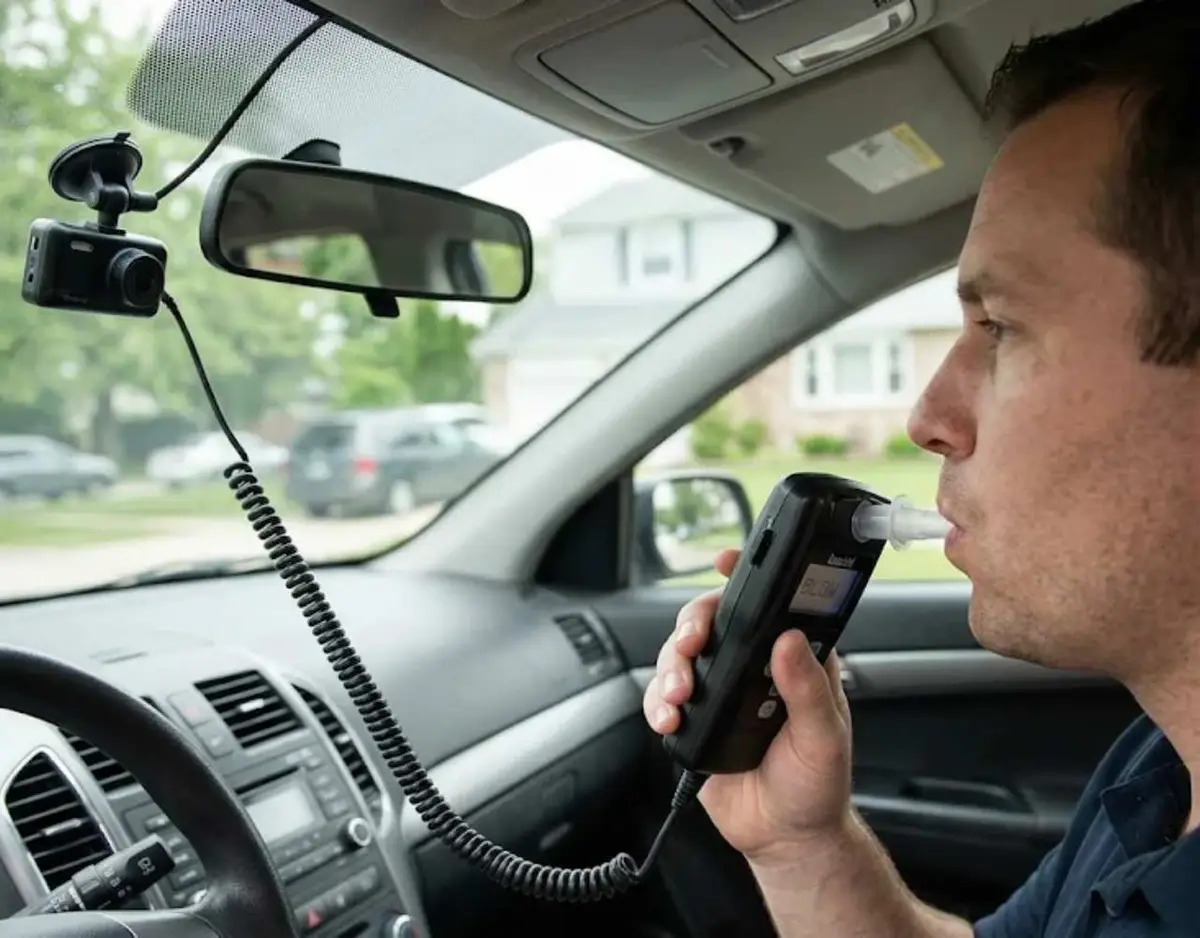



Ignition Interlock Device Program Illinois BAIID
 11/21/2026

A drunk driving charge can touch nearly every part of your life. Your driver’s license, your criminal record, and even your job can all be affected by a single DUI arrest. If you are facing a charge right now, you do not have to sort through it alone.
Ktenas Law’s DUI defense attorneys help clients across Cook County fight DUI charges while protecting their rights at every step. Meeting with the right attorney early and asking the right questions can shape how the rest of your case goes. Here is what to ask and what to know before you hire someone to handle your defense.
The questions worth asking are about this case, not the firm. How many DUI cases does the attorney handle, who will actually appear for you, what happens with the statutory summary suspension deadline, and what is realistic given your record and the facts of the stop.

A DUI charge is not the same as a DUI conviction. Even a first-time arrest with a failed test can carry real defenses, and an experienced attorney knows where to look for them.
If you only had a drink or two, it is easy to assume the court will go easy on you. That assumption is risky. Prosecutors pursue DUI cases seriously, regardless of how close you were to the legal limit.
A skilled DUI lawyer reviews your case for procedural and evidentiary problems, including errors in:
None of this guarantees a dismissal or a reduced charge. What it does is give your attorney real material to work with instead of accepting the state’s version of events at face value.
Do not hire the first attorney you talk to without comparing at least a couple of options. A short conversation can tell you a lot about whether an attorney is the right fit for your case.
An attorney who promises an outcome before reading the police report is telling you what you want to hear. Our DUI defense page explains what we can actually assess up front.
Ask directly how the attorney structures fees for a case like yours, what is included, and what could trigger an additional charge later, such as a trial. Ask what forms of payment they accept and when payment is expected. A firm should be able to walk you through its fee structure clearly during your initial consultation.
No honest attorney will promise you a specific result. What they can do is walk you through your options based on the facts of your case and their experience with similar ones.

A first DUI is charged as a Class A misdemeanor in Illinois. Here is what that exposure actually looks like:
A failed or refused chemical test also triggers a statutory summary suspension, an administrative license action that runs separately from the criminal case itself.
Your license is not suspended immediately. Under current law(opens in a new tab), the suspension takes effect automatically on the 46th day after you receive notice, unless you and your attorney challenge it before then. This is one of the most time-sensitive windows in any DUI case, and it is a different process from license reinstatement, which the firm does not handle.
Many DUI cases resolve through plea negotiation rather than trial. That can mean pleading to the DUI charge in exchange for a lighter sentence than the maximum, or it can mean the DUI charge gets dismissed in favor of a plea to a different offense, most often reckless driving under 625 ILCS 5/11-503.
Illinois DUI content sometimes calls this a “wet reckless,” a term that started in other states but shows up informally here as shorthand for a DUI reduced to reckless driving. It is not an official legal category in Illinois, and whether it is available at all depends on the facts of your case, your record, and the prosecutor handling it. No attorney can promise this outcome in advance.
There is usually little upside to entering a plea at your very first court date. Prosecutors rarely offer their best deal on day one, and the offer on the table early in a case is often the same one, or a worse one, than what becomes available later.
Pleading not guilty at your first appearance and getting a new court date gives your attorney time to do the work: reviewing the state’s evidence, checking the arrest for procedural problems, and building a defense strategy specific to your case. Even if you eventually decide a plea makes sense, that extra time and preparation often changes what is actually on offer.
A DUI conviction tells your insurance company you are a higher-risk driver, and premiums reflect that. In Illinois, a DUI conviction raises the average annual premium by roughly $665, or about 51 percent, according to insurance rate analysis from The Zebra. The exact increase depends heavily on your insurer and your driving history before the conviction, so treat any specific number as an estimate rather than a guarantee.

Generally, no. Illinois is one of the few states where a DUI conviction is not eligible for expungement or sealing under the state’s criminal records law, meaning it can remain part of your public record permanently. This is one more reason it is worth exploring every available defense before a case ends in a conviction, rather than assuming the consequences are temporary. (Confirm current expungement and sealing statutes before publishing, since eligibility rules can change.)
It depends on the facts. If the evidence against you is strong, your BAC was well above the legal limit, and there is little in the arrest record to challenge, many people in that position choose to plead guilty, and an attorney’s role becomes more about managing the outcome than fighting the charge.
If there are facts that could increase your exposure, such as an accident, a high BAC, or a passenger in the car, or facts that could work in your favor, such as a questionable stop or testing irregularities, an attorney’s review matters more. A lawyer can help you recognize which situation you are in, something that is difficult to judge accurately on your own.
Alcohol-impaired driving remains a serious problem nationally. According to the CDC, alcohol-impaired driving crashes killed 13,524 people in the United States in 2022, or about 37 people every day, and accounted for roughly 32 percent of all traffic deaths that year. Prosecutors and police treat DUI enforcement accordingly, and courts rarely go easy on unrepresented defendants simply because the case seems minor to them.
If you are considering fighting a DUI charge without a lawyer, understand what that decision actually involves. Most people have no prior experience with criminal court procedure, negotiating with a prosecutor, or identifying weaknesses in a police report. The outcome of your case can affect your license, your record, and your finances for years, so it is worth at least consulting an attorney before deciding to go it alone.
Cook County handles an enormous volume of DUI cases every year, across courthouses that include the Chicago Traffic Court and the Markham courthouse. Procedures, plea practices, and even how quickly a case moves can vary by courtroom and by which judge and prosecutor are assigned.
An attorney who regularly appears in these specific courthouses brings something a general practice firm cannot: familiarity with how a particular courtroom actually runs, not just what the statute says on paper.

Every attorney at Ktenas Law spent time as a prosecutor before moving to defense work. Alex Ktenas previously served as an Assistant State’s Attorney in both Chicago and Markham, which means he has sat on the other side of Cook County DUI cases and knows how they get built. That perspective shapes the questions we ask on your case from the first meeting.
We do not promise outcomes, and no honest attorney should. What we can offer is a careful, former-prosecutor’s review of your arrest, your evidence, and your options, so you go into your case informed rather than guessing.
Our Cook County DUI attorneys have helped many clients work through the process after a DUI arrest, and we can do the same for you. At Ktenas Law, we bring former-prosecutor insight to every case and take the time to explain your options clearly.
To schedule a Free Case Review, call our office at (312) 800-1626, or reach out online to see how we can help.
You are not required to have one, but an attorney can still review your case for errors before you plead, and can make sure you understand every consequence of the plea, including license and insurance effects, before you sign anything.
It depends entirely on the facts of your arrest. Some cases have real weaknesses in the evidence or procedure that support a dismissal or reduction. Others do not. No attorney can promise a dismissal before reviewing your case.
Under Illinois’ statutory summary suspension law, the suspension takes effect on the 46th day after you receive notice unless it is successfully challenged before then. This is separate from license reinstatement, which is a different process entirely.
No attorney can guarantee a result. What an attorney can do is identify defenses, negotiate with the prosecutor, and make sure procedural mistakes in your arrest do not go unnoticed.
Not necessarily. A first offense is a Class A misdemeanor with a maximum of 364 days in jail, but many first-time cases result in probation, community service, or a shorter sentence instead of the maximum. The outcome depends on the specific facts of the case and the judge.
Bring any paperwork the police gave you at your arrest, including the notice of statutory summary suspension, your court date information, and a written timeline of what you remember from the stop and arrest while it is still fresh.