How Long Does a DUI Stay on Your Record in Illinois?
 11/10/2026
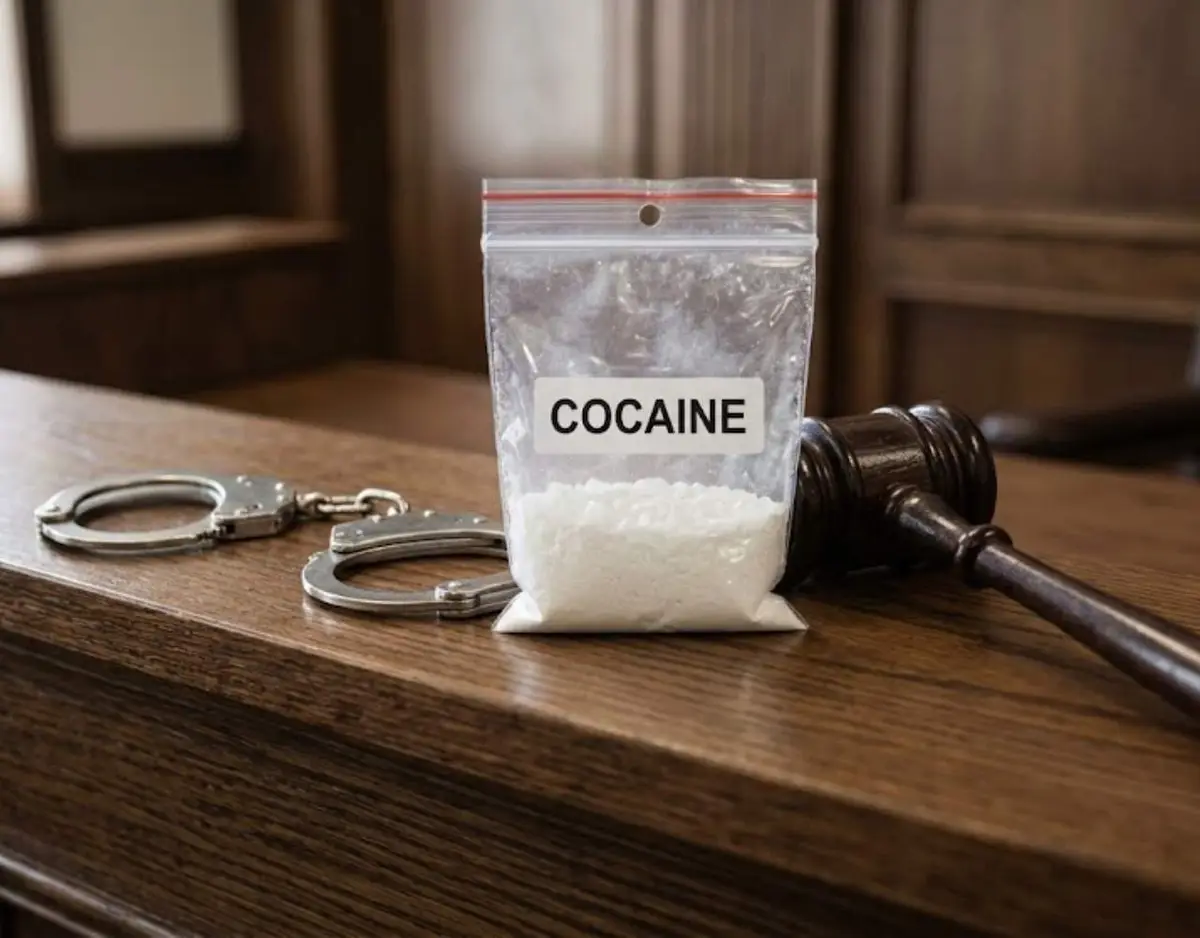
A cocaine possession charge in Illinois is a felony from the first gram. There is no misdemeanor version of this charge in Illinois the way there is in some states, and the penalties climb fast once weight becomes a factor. At Ktenas Law, our criminal defense lawyers in Chicago handle these cases across Cook, Will, and DuPage County courts, and we know how quickly a possession charge can escalate if it is not handled correctly from the start.
This article walks through how Illinois classifies cocaine possession, what separates a Class 4 felony from a Class 1 felony, and what a person facing this charge should do next. It is not a substitute for speaking with an attorney about your specific case.
Any amount of cocaine in Illinois can support a felony charge under 720 ILCS 570/402. The class depends almost entirely on weight. Less than 15 grams is a Class 4 felony. Fifteen grams or more moves into Class 1 territory, where the ranges climb steeply.

Any amount of cocaine found on you or under your control in Illinois can lead to a felony charge under the Illinois Controlled Substances Act, 720 ILCS 570/402. The exact felony class depends almost entirely on weight. Less than 15 grams is charged as a Class 4 felony. Fifteen grams or more moves the charge into Class 1 felony territory, with the sentencing range increasing again at 100 grams, 400 grams, and 900 grams.
Weight is not the only factor a prosecutor considers. Prior drug convictions, whether the cocaine was found alongside packaging materials or scales, and the specific facts of the stop or search can all affect how a case is charged and how it moves through court. None of that is fixed once you have an attorney working the case. It is fixed by what actually happened, and a defense attorney’s job is to test whether the state can prove it.
Illinois prosecutors can charge possession two different ways, and the distinction matters for how a case gets defended.
Actual possession means the cocaine was found on your person, in your pocket, your hand, or somewhere directly on your body at the time of the stop or search. These cases tend to be more direct for the state to build, but that does not mean they are undefendable. How the search was conducted, whether officers had legal grounds to stop and search you, and whether your rights were respected during the encounter are all still open questions an attorney can examine.
Constructive possession applies when cocaine is found somewhere you had control over, like your car, your home, or a room you have keys to, even if it was not on your body. These cases often come down to who else had access to that space. Shared access, whether it is a roommate, a passenger, or a family member, can create real doubt about whose cocaine it actually was.
Either way, being charged is not the same as being convicted. The facts of the search, the evidence chain, and the specific circumstances of your case all shape what defense options exist.
The State can charge possession without ever finding the drugs on you, through constructive possession. Our drug charge defense page explains what that requires.
Illinois ties cocaine possession penalties directly to weight. Here is how the tiers break down under 720 ILCS 570/402(opens in a new tab):
These are the statutory ranges, not a prediction of what any specific case will result in. Sentencing also depends on prior record, whether probation is available for the charge level, and the judge handling the case. An attorney reviewing your case can walk through where your charge falls and what factors are in play.

Simple possession and possession with intent to deliver are charged under different sections of the same statute, and the difference changes everything about how a case is handled.
Simple possession, charged under Section 402, means the state alleges you had cocaine for personal use. Possession with intent to deliver, charged under a different section of the Illinois Controlled Substances Act, means the state alleges you intended to sell, distribute, or manufacture it. That charge carries its own separate and generally harsher penalty structure.
Prosecutors often point to circumstantial evidence to argue intent to deliver: a large quantity, cash in small denominations, scales, baggies, or text messages. None of that automatically proves intent. It is evidence the state has to present, and a defense attorney has every right to challenge.
To convict someone of cocaine possession in Illinois, the state has to prove more than that cocaine existed somewhere near you. Generally, prosecutors must establish that you knew the substance was present, that you had control over it (either actual or constructive), and that the substance itself is what lab testing confirms it to be.
Each of those elements can be challenged. Did the search that turned up the cocaine follow the law? Was the substance properly tested and the chain of custody documented? Did you actually know what was in the space where the drugs were found, or is the state assuming you did because it was somewhere you had access to? These are the questions a defense attorney works through early in a case.
There is no single playbook for defending a cocaine possession charge, because no two cases start from the same facts. A defense attorney typically reviews the search and seizure, the lab results, the officer’s report, and any body camera or dash camera footage to see where the state’s case is strong and where it is not.
Some cases turn on a search that exceeded its legal scope. Others turn on a shared space where more than one person had access to where the drugs were found. Others come down to lab testing or chain-of-custody issues that raise real questions about the evidence itself. A charge is not a conviction, and the right approach depends entirely on what the facts actually show once an attorney has reviewed them.
The choices made in the first hours and days after an arrest can shape the rest of the case. A few things matter most:
Where a cocaine possession case is charged affects how it moves through the system. Cook County drug cases are typically handled out of the Leighton Criminal Court Building at 26th and California, along with branch courts including Markham for cases originating in the south suburbs. Will County and DuPage County run their own separate court systems, court call schedules, and, in practice, different tendencies from judge to judge and courtroom to courtroom.
Our attorneys at Ktenas Law are former prosecutors who worked inside these same courts. Alex Ktenas prosecuted in both the Chicago and Markham branches of the Cook County State’s Attorney’s Office, Nick Ktenas prosecuted felony cases out of Markham, and Lauren Ktenas prosecuted in Will County. That background means we know how these specific courtrooms tend to operate, not just what the statute says on paper.

A cocaine possession charge can move faster than most people expect. Bond hearings, preliminary court dates, and evidence deadlines start stacking up almost immediately, and decisions made without a lawyer in the room are difficult to undo later.
Our attorneys at Ktenas Law review the search, the lab work, and the arrest itself before deciding on an approach, because a felony drug charge deserves that level of scrutiny from day one. If you are guilty and looking at ways to reduce exposure, or you believe the search or the evidence was flawed, the path forward starts the same way: with a full review of what actually happened in your case.
We offer a free case review to talk through what you are facing and what your options look like from here.
If you or someone you know is facing a cocaine possession charge anywhere in Cook, Will, or DuPage County, call Ktenas Law at (312) 800-1626 or request a free case review online. The sooner an attorney is involved, the more options stay open.
Yes. Illinois does not have a misdemeanor tier for cocaine possession. Even amounts under 15 grams are charged as a Class 4 felony under 720 ILCS 570/402.
Actual possession means the cocaine was found directly on you. Constructive possession means it was found in a space you controlled, like a car or home, even if it was not on your body. Both can be charged as possession, but they raise different defense questions, especially around who else had access to that space.
It depends entirely on weight. Under 15 grams is a Class 4 felony with a 1 to 3 year range. Fifteen grams or more moves into Class 1 felony territory, where the range climbs from 4 to 15 years up to 10 to 50 years at 900 grams or more, under 720 ILCS 570/402.
It depends on the facts of the case, including how the search was conducted, whether the evidence was properly handled, and your prior record. No attorney can promise a specific outcome before reviewing the case, but these are exactly the questions worth having an attorney examine early.