How Long Does a DUI Stay on Your Record in Illinois?
 11/10/2026
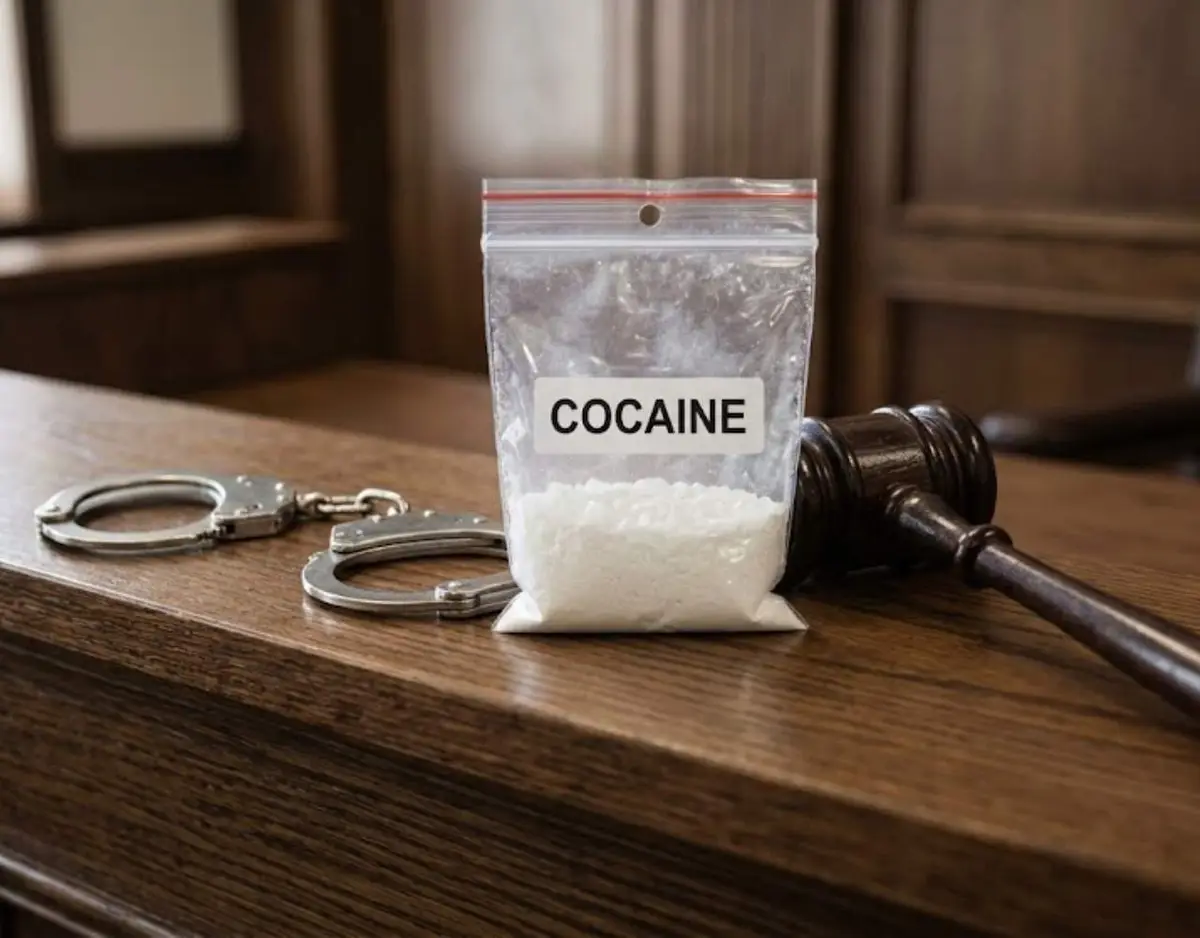
A possession charge and a possession with intent to deliver charge are not the same crime, even when police find the exact same baggie in the exact same pocket. The difference is intent, and Illinois treats that difference as the line between a low-level felony and a Class X sentence measured in decades.
If you or someone you love was arrested in Cook County and the police report uses words like “intent to deliver,” “manufacture or delivery,” or “possession with intent to distribute,” this page walks through what that actually means under Illinois law, what drives the sentencing range, and what former prosecutors look at first when they start building a defense.** Call Ktenas Law and their experienced drug lawyers for your free consultation.

Simple possession and possession with intent are two different statutes with two very different outcomes. Possession is charged under 720 ILCS 570/402 and turns on whether you knowingly had the substance. Intent to deliver is charged under 720 ILCS 570/401 and carries far heavier classes.
Illinois splits drug offenses into two different statutes with two very different outcomes. Simple possession is charged under 720 ILCS 570/402(opens in a new tab) and turns on one question: did you knowingly have the substance. Possession with intent to deliver is charged under 720 ILCS 570/401(opens in a new tab) and adds a second question: did you intend to transfer it to someone else, whether or not money changed hands.
That second question is what moves a case from a lower-level felony into Illinois’s steepest sentencing brackets. The amount of the drug involved sets the specific felony class and prison range once intent to deliver is part of the charge. Below a certain amount, and without other evidence of intent, the same substance is usually charged as simple possession instead.
Prosecutors do not need proof that a sale actually happened. Under Section 401, an attempted or intended transfer counts the same as a completed one, and the statute treats manufacturing, delivering, and possessing with intent to deliver as the same offense for sentencing purposes.
Section 401 of the Illinois Controlled Substances Act makes it illegal to manufacture, deliver, or possess with intent to manufacture or deliver a controlled substance, a counterfeit substance, or a substance analog. “Deliver” covers any actual or attempted transfer of the drug to another person, paid or unpaid.
The statute applies to Schedule I through Schedule V controlled substances, including heroin, fentanyl, cocaine, morphine, LSD, and a long list of prescription opioids and depressants when possessed without authorization. Each controlled substance a person is charged with delivering counts as a separate violation.
Intent is usually argued from packaging, cash, scales, or phone messages rather than an actual sale, which is exactly why it is contestable. See our drug charge defense page.
Two substances people commonly associate with “drug trafficking” are not charged under Section 401 at all. Methamphetamine is excluded by name from Section 401 and is instead prosecuted under its own law, the Methamphetamine Control and Community Protection Act. Cannabis is not a controlled substance under the Illinois Controlled Substances Act either. Illegal cannabis delivery is charged under the Cannabis Control Act, and regulated adult use is governed separately by the Cannabis Regulation and Tax Act.
This distinction matters for a defense. A police report or charging document that cites the wrong statute for the substance involved is worth a second look, and it is one of the first things worth confirming with the actual lab report rather than the arresting officer’s field description.

Once intent to deliver is part of the charge, Illinois law uses specific weight brackets to set both the felony class and the sentencing range. These come directly from the law and have not changed in a recent legislative session, but they are dense enough that they get misquoted often, including on some of our own older content, which is part of why this page exists.
Illinois Class X felonies are not probation-eligible in nearly all circumstances, which is the single biggest reason the weight bracket a case falls into matters so much before a defense strategy is even discussed.
Illinois law adds three years to both the minimum and the maximum sentence whenever the delivered substance tests positive for any amount of fentanyl, even if the person believed they were selling something else entirely. This enhancement applies on top of the weight bracket penalties above and is a genuinely current issue: it shows up in cases where counterfeit pills or cut heroin test positive for fentanyl the person never knew was present. Very few competitor pages in this market address the fentanyl add-on directly, which makes it a real content and search opportunity as well as an important fact for anyone facing this charge.
Weight is one factor, but it is rarely the only one police and prosecutors point to when they charge intent to deliver instead of simple possession. In practice, the evidence usually falls into a few categories:
None of these facts are automatic. A scale can belong to someone who cooks. Cash can be a paycheck. Each piece of evidence in a delivery case has to be examined on its own, and how it was gathered, whether through a lawful search, a consented search, or something that should have required a warrant, is often where a defense actually starts.

Illinois law adds separate, harsher penalties when a delivery happens in certain places or alongside a weapon. These enhancements attach on top of the base charge rather than replacing it.
Delivering, or possessing with intent to deliver, within 500 feet of a school, a public park, a church or other place of worship, or a senior housing facility such as a nursing home or assisted living center can raise the charge by a full felony class, up to and including a Class X felony, when people are present or reasonably expected to be present. Delivering to a person under 18 can double both the minimum and maximum sentence otherwise available under Section 401.
If a firearm is found along with a Class X amount of drugs under Section 401, Illinois can charge armed violence as a separate offense. Armed violence with a handgun or other Category I firearm is itself a Class X felony carrying a minimum 15-year sentence, and when the underlying drug charge is a Class X amount under Section 401, the law requires the armed violence sentence to run consecutively to the drug sentence rather than at the same time. That combination is how a case that might otherwise carry a 6-year minimum can turn into a 21-year minimum before anything else about the case is even discussed.
Illinois does offer a first-offender probation option that lets a qualifying person avoid a conviction entirely if they complete the terms, but it is written narrowly. Section 410 of the Illinois Controlled Substances Act applies only to simple possession charged under Section 402, not to a charge involving intent to deliver under Section 401.
This is a meaningful distinction from our earlier article on Cook County drug diversion programs, which covers simple possession cases. If the facts of a case genuinely support only personal use rather than delivery, one goal of an early defense review is finding out whether the charge itself was filed too high, since a reduction to simple possession could open the door to programs that a delivery charge forecloses entirely.
A delivery case usually rests on a handful of pieces of physical and digital evidence: a lab report identifying the substance and its weight, a chain of custody log showing who handled it and when, officer field notes from the stop or search, and sometimes phone records or informant statements. A defense review starts by pulling apart exactly this kind of documentation, checking the crime lab’s testing protocols, the evidence handling records, and the search or warrant that led to the arrest in the first place.
That review asks specific questions. Was the substance actually tested, or is the charge based on a field test alone. Did the chain of custody log have any gaps between the arrest and the lab. Was the search that turned up the drugs lawful, or was it built on a stop that should not have happened. Each of those questions can change what the state is able to prove, independent of how much was found.

Felony drug delivery cases in Cook County move through the same felony court system as other Class X and Class 1 offenses. Depending on where the arrest happened, that means either the Leighton Criminal Court Building at 26th and California in Chicago or the Markham courthouse serving the south suburbs. Alex Ktenas spent his time as a Cook County Assistant State’s Attorney in both locations, which means the courtrooms, the judges, and the local charging patterns in a delivery case are not unfamiliar territory.

A delivery case is built differently than a simple possession case from the moment police start writing the report. Controlled buys, confidential informants, surveillance logs, and wiretap language all show up in these files in ways they rarely do in a straightforward possession stop. Knowing how the Cook County State’s Attorney’s Office builds and charges these cases from the inside changes what a defense team looks for first, because it changes what the state’s own file is likely to contain and where its weak points usually sit.
That is the background Alex Ktenas and Lauren Ktenas each bring from their own time as prosecutors in Cook and Will County. It is not a guarantee of any particular result. It is a reason the review of a delivery case starts from what the state actually has to prove, not just what was found in a pocket or a car.
A delivery charge moves fast, and the earlier a defense attorney can review the search, the lab work, and the charging decision, the more options tend to be on the table. If you or someone you love is facing a possession with intent to deliver charge anywhere in Cook County, call Ktenas Law at (312) 800-1626 for a free case review.
Simple possession under Section 402 requires only knowing possession of a controlled substance. Possession with intent to deliver under Section 401 adds a second element: evidence that the person intended to transfer the drug to someone else. That second element is usually shown through circumstantial evidence like packaging, scales, records, or statements, not a confession.
Illinois’s first-offender probation program under Section 410 applies only to simple possession, not to a charge involving intent to deliver. Whether probation is available at all for a delivery charge depends on the felony class involved. Class X convictions are not probation-eligible in nearly all circumstances, while lower felony classes may allow it depending on the person’s record. This is worth reviewing with an attorney case by case.
No. Weight sets the sentencing bracket once intent to deliver is established as part of the charge, but weight by itself does not prove that intent existed, especially for amounts closer to the personal-use range. Packaging, equipment, records, and statements typically carry more weight in showing intent than the number on a scale.
Most possession with intent to deliver cases in Cook County are charged under Illinois state law and prosecuted in Cook County circuit court. Larger-scale or multi-state cases can draw federal attention under separate federal law and procedure, which is a different process with its own courts and sentencing rules.