


How Long Does a DUI Stay on Your Record in Illinois?
 11/10/2026

Resisting arrest rarely shows up as the only charge on a police report. Most people facing it were stopped for something else first, like a traffic stop, a domestic call, or a bar fight, and the resisting or obstructing charge got added on top. That makes it one of the most common criminal charges filed in Cook County courts, and one of the most misunderstood.
If you were arrested or charged with resisting or obstructing a peace officer in Illinois, the attorneys at Ktenas Law can review the police report, the body camera footage if it exists, and the underlying arrest itself to see whether the charge holds up. Call (312) 800-1626 for a free case review.
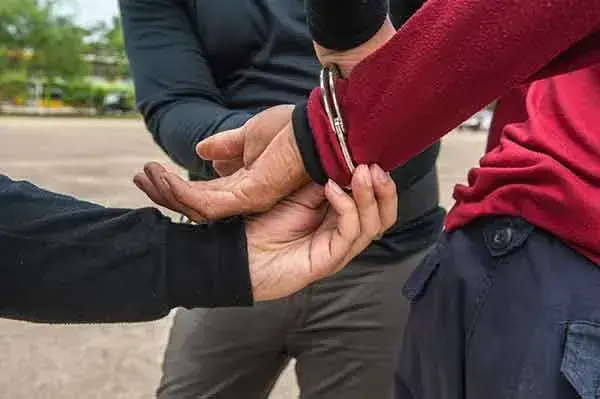
Resisting arrest in Illinois is usually a Class A misdemeanor. It becomes a Class 4 felony only when the resistance directly causes an injury to the officer, firefighter, or correctional employee involved. A lot of online material blurs those two together.
In most cases, resisting arrest in Illinois is a Class A misdemeanor. It becomes a Class 4 felony only if the resistance is the direct cause of an injury to the officer, firefighter, or correctional employee involved.
That distinction matters because a lot of online information blurs the two together, describing “felony resisting arrest” as if the classification depends on general circumstances like how serious the underlying stop was. It does not. Under Illinois resisting arrest law, 720 ILCS 5/31-1(opens in a new tab), the felony version turns on one specific fact: did the officer get hurt because of what you did? Without that injury, the charge stays a misdemeanor, no matter how the encounter looked or how it’s described in the police report.
The misdemeanor version still carries real consequences. It is not the kind of charge where a good outcome is automatic, and Illinois law removes one option that people often expect: court supervision is not available for a resisting arrest conviction. The lowest possible outcome on a conviction is a sentence, not a dismissal disguised as probation.
The statute covers two separate kinds of conduct. The first is physically resisting a lawful arrest, pulling an arm away, tensing up, refusing to be handcuffed. The second is obstructing an officer’s authorized duties more broadly, which can include things that have nothing to do with a physical struggle at all.
Conduct that commonly leads to this charge includes:
One detail that surprises a lot of people: the statute does not require that you were guilty of whatever the officer originally stopped you for. You can be charged with resisting arrest during an encounter where the underlying accusation later gets dropped entirely, because the two charges are legally separate.
An injury is what separates the misdemeanor from the felony, so how the injury is described matters. Our criminal defense attorneys start there.
A Class A misdemeanor conviction can carry up to 364 days in county jail, a fine of up to $2,500, or both. Illinois law also requires a minimum sentence on conviction, either 48 consecutive hours in jail or 100 hours of community service, and a court cannot use probation to reduce or replace that minimum.
If the charge is elevated to a Class 4 felony because an officer, firefighter, or correctional employee was injured, the exposure changes substantially: a determinate prison term of one to three years, a fine of up to $25,000, or both. An extended-term sentence for a Class 4 felony can run three to six years if aggravating factors apply.
None of these numbers move based on how a case looks in a police report. Actual sentencing depends heavily on prior record, the judge assigned to the courtroom, and how the case is negotiated, which is exactly why the mandatory minimum and the felony threshold deserve attorney review rather than a generic penalty chart.

A conviction requires the prosecution to show that you knew you were dealing with a peace officer, firefighter, or correctional employee, and that you knowingly resisted or obstructed an act that was within that person’s official authority. Both pieces have to hold up, not just one.
That knowledge requirement opens real defense territory. Officers in unmarked cars, plainclothes assignments, and fast-moving arrest situations do not always identify themselves clearly before physical contact starts. If the State cannot show you reasonably knew who you were dealing with, the charge is harder to sustain.
The “authorized act” requirement matters just as much. An officer acting outside their lawful authority, making an arrest without probable cause, for example, changes the legal picture entirely.
Illinois law includes a rule that changes how these cases get defended: a person cannot be arrested for resisting arrest under this statute unless there was an underlying offense that justified the arrest in the first place. If the initial stop or arrest was not lawful, the resisting charge built on top of it is vulnerable.
This is where the former-prosecutor background at Ktenas Law does real work. Alex Ktenas built his reputation as a Cook County prosecutor auditing officer field notes and procedural documentation line by line, and that same approach applies directly here: comparing the arrest report against body camera footage, dispatch logs, and the officer’s own timeline to see whether the underlying arrest, and everything charged on top of it, will hold up.
Other defense angles worth raising with an attorney include:
None of this is a promise that a charge gets reduced or dismissed. It is the actual analysis a defense attorney runs before deciding how to approach a specific case.
The decisions made in the first few days after an arrest shape how the case moves from there.

Resisting arrest charges filed in Chicago and the surrounding suburbs move through the Circuit Court of Cook County, one of the largest unified court systems in the country. Cases from the south suburbs, including Orland Park, Tinley Park, Homewood, and Frankfort, are typically heard at the Markham courthouse (District 6) rather than downtown, while cases connected to Will County move through Will County’s own circuit court.
Which courthouse and which judge a case lands in can affect everything from the pace of the docket to how a plea negotiation typically goes. Attorneys who regularly appear in a specific courtroom build a working sense of how that judge and that prosecutor’s office tend to handle resisting arrest cases, which is part of why local court experience matters as much as knowing the statute itself.
Resisting arrest cases live or die on the officer’s own account of what happened, often without the kind of physical evidence, video, or witness statements that anchor other criminal charges. That makes the report itself, and everything that led up to it, the center of the defense.
The attorneys at Ktenas Law built their careers on the other side of these cases. Alex Ktenas spent years as a Cook County Assistant State’s Attorney and knows how these charges get built, negotiated, and sometimes overcharged. Lauren Ktenas adds Will County courtroom experience for cases that fall outside Cook County. That combined background means a resisting arrest charge gets reviewed by people who have seen how these cases get built from the other side of the courtroom.
A resisting arrest charge can affect your record even when it started as a misdemeanor tacked onto an unrelated stop. The sooner an attorney reviews the police report and any available footage, the more options are usually on the table.
Reserve a free case review or call (312) 800-1626 to speak with a Ktenas Law criminal defense attorney about your charge.
Yes. Resisting arrest is a separate offense from whatever you were originally stopped or arrested for. Illinois law does require that there was a legitimate underlying reason for the arrest attempt in the first place, but the resisting charge can still stand even if that original charge is later reduced or dismissed.
It is more serious than many people assume. Even as a misdemeanor, a conviction carries a mandatory minimum of jail time or community service, with no option for court supervision to avoid it. If an officer is injured during the incident, the charge becomes a felony with prison exposure.
They fall under the same Illinois statute and carry the same penalties, but they describe different conduct. Resisting typically involves physical resistance to an arrest. Obstructing is broader and can include actions like blocking an officer’s access to a scene or interfering with an investigation, without any physical struggle at all.
A conviction can appear on a criminal background check, which is part of why the outcome of the case matters beyond the immediate penalty. An attorney can talk through what options, including negotiated resolutions, may be available for a specific case.