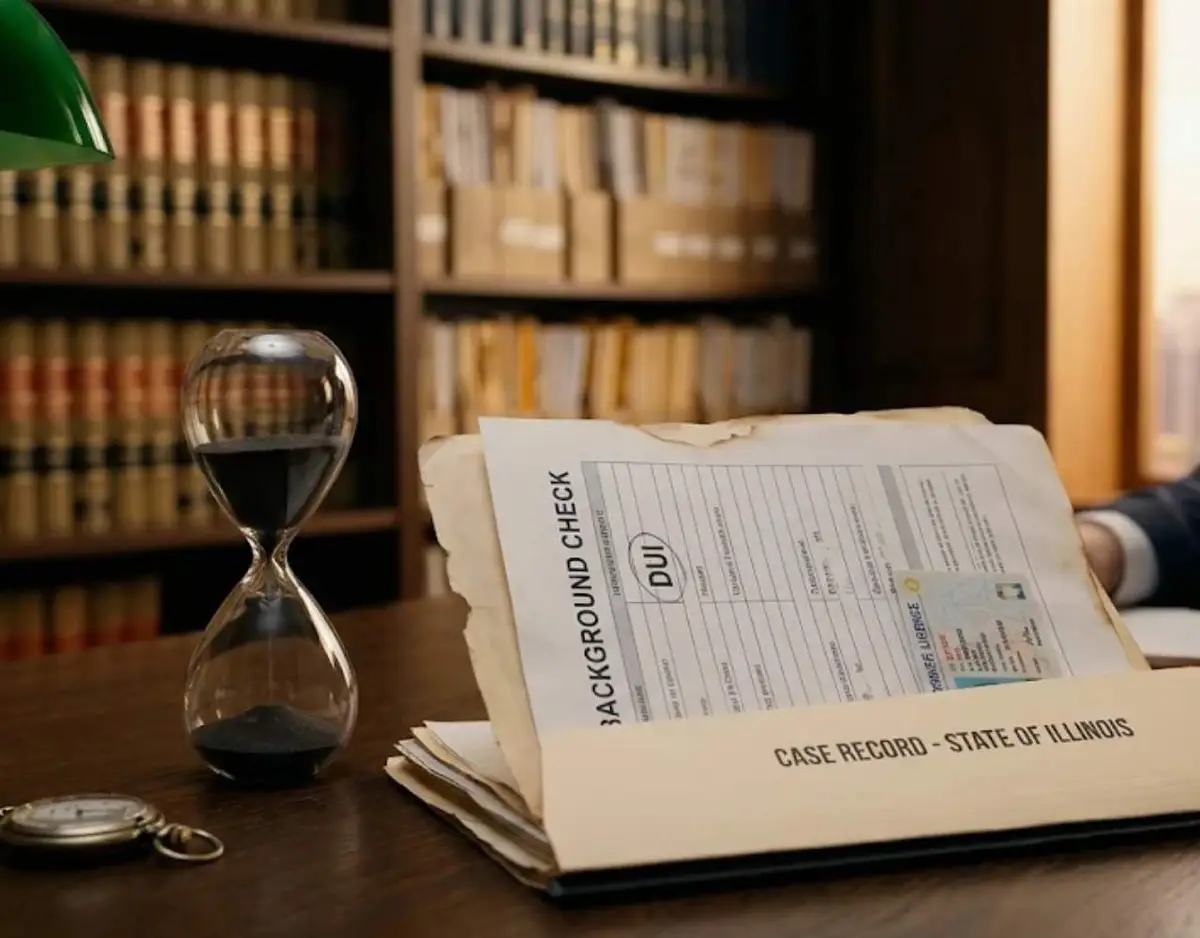
How Long Does a DUI Stay on Your Record in Illinois?
 11/10/2026

Most resisting arrest charges in Illinois start as something else. An officer responds to a different call entirely, like a traffic stop, a domestic dispute, or a noise complaint, and the resisting charge gets added on top once things go sideways during the arrest itself. That is part of what makes this charge so common and so easy to end up facing without ever intending to break the law.
Resisting arrest is a Class A misdemeanor, and it comes with sentencing rules that surprise a lot of people, including a mandatory minimum jail term and a bar on court supervision. In certain situations, it becomes a felony. Ktenas Law defends resisting arrest charges across Cook, Will, and DuPage County courts, built by attorneys who spent years on the other side of these cases as prosecutors.

720 ILCS 5/31-1 covers two separate acts, not one: resisting an arrest, and obstructing an officer carrying out an authorized act. Illinois courts have held that resisting requires a physical act. Arguing, complaining, or asking why you are being arrested is not enough.
720 ILCS 5/31-1(opens in a new tab) actually covers two separate acts, not one. A person commits the offense if they knowingly resist arrest, or if they knowingly obstruct a peace officer, firefighter, or correctional institution employee from carrying out an authorized act within their official duties. Either one, on its own, is enough to support the charge.
The statute reaches beyond officers. It also covers firefighters (including State Fire Marshal arson investigators) and correctional employees who supervise people in custody. All three groups are treated the same way under the law.
Two limits matter just as much as the definition itself:
Not every uncooperative moment during an arrest becomes a resisting charge, but the range of conduct the statute actually covers is broader than most people assume. Illinois courts have consistently held that resisting requires some form of physical act, not simply arguing, complaining, or asking why you are being arrested.
Conduct that commonly leads to a charge includes:
A person also has to know that the individual they are resisting or obstructing is actually a peace officer, firefighter, or correctional employee. That knowledge requirement, discussed further below, is often where a real defense takes shape.
The line between refusing to cooperate and physically resisting is where these cases are won. Our criminal defense team works that line.
The statute’s reach is wide on purpose. “Correctional institution employee” includes anyone employed to supervise people in a jail, prison, reformatory, half-way house, or police detention area, whether that person is awaiting trial, serving a sentence, or in custody for a probation or parole violation. “Firefighter” includes any member of a municipal or district fire department performing firefighting duties, along with arson investigators from the Office of the State Fire Marshal.
This matters in practice because a resisting charge can arise from an interaction with correctional or detention staff, not only from a street-level arrest by a police officer.

A standard resisting arrest conviction under 720 ILCS 5/31-1(a)(opens in a new tab) is a Class A misdemeanor. Under 730 ILCS 5/5-4.5-55, that carries a determinate sentence of less than one year, commonly applied as up to 364 days in county jail, along with a fine of up to $2,500.
On top of any other sentence, a court is required to impose a minimum of 48 consecutive hours of imprisonment, or order at least 100 hours of community service, on anyone convicted of this offense. Probation cannot be used to reduce or eliminate that mandatory minimum. This is not a discretionary add-on. It applies to every conviction under the statute.
This is one of the more damaging facts about a resisting arrest charge, and it is the reason fighting the case or negotiating a reduction matters so much. Under 730 ILCS 5/5-6-1(c)(opens in a new tab), Section 31-1 is specifically named among the Class A misdemeanors that are not eligible for court supervision.
Court supervision matters because it lets a defendant complete conditions and walk away without a conviction on their record. Most Class A misdemeanors in Illinois allow for it. Resisting arrest does not. Practically, that means the floor for a guilty finding on this charge is a conviction, not a clean disposition, which is part of why so many resisting arrest cases get negotiated down to a different charge rather than resolved as-is.
Illinois Law raises the offense to a Class 4 felony when the violation was the proximate cause of an injury to the peace officer, firefighter, or correctional institution employee involved. That does not require an intent to injure. It requires that the resistance itself was the proximate cause of the injury that occurred.
A Class 4 felony conviction carries a prison term of 1 to 3 years (3 to 6 years if the case qualifies for an extended term), along with a fine of up to $25,000. This is a significant jump from the misdemeanor version of the same charge, and it is why the specific facts of how an arrest unfolded matter so much.

Every version of this offense requires that the person acted knowingly, both in resisting or obstructing, and in knowing that the person they were dealing with was actually a peace officer, firefighter, or correctional employee. A chaotic scene, plain clothes, an unmarked vehicle, or confusing commands can all raise a genuine question about what someone actually understood was happening in the moment.
This is also where the difference between resisting and simply not moving fast enough comes into focus. Confusion, fear, and a slow reaction are not automatically the same thing as knowingly resisting.
This point gets misunderstood constantly, often because it varies from state to state and people repeat what they have heard about a different jurisdiction. In Illinois, it does not work that way. Under 720 ILCS 5/7-7(opens in a new tab), a person is not authorized to use force to resist an arrest they know is being made by a peace officer, even if they believe the arrest is unlawful, and even if the arrest actually is unlawful.
In plain terms, believing (correctly or not) that an officer lacked grounds to arrest you does not give you the legal right to physically resist. The proper way to challenge an unlawful arrest is in court afterward, through a motion, a suppression argument, or a civil claim, not by resisting in the moment. This is one of the more counterintuitive parts of Illinois law, and it is often the single biggest misconception clients bring into a first conversation about their case.
Every resisting arrest case turns on its own facts, and no outcome can be promised in advance. That said, a few angles come up repeatedly:
An attorney can review the police report, any available footage, and the underlying charge to identify which of these apply to a specific case.

Resisting arrest charges move through the same branch and felony courts as the underlying offense that triggered the arrest, which means the venue depends heavily on where and how the arrest happened. In Cook County, that can mean anywhere from a local branch court to the Leighton Criminal Courthouse for felony-level cases. In Will County, felony and serious misdemeanor matters are handled through the Will County Circuit Court in Joliet.
Because the mandatory minimum and the supervision bar apply regardless of county, the practical difference between courts usually comes down to how a given courtroom and prosecutor’s office typically approaches a reduction request, not the underlying statute itself.
Alex Ktenas spent years as a Cook County Assistant State’s Attorney in both Chicago and Markham before founding Ktenas Law, and brings direct knowledge of how these cases are built and charged from the inside. Lauren Ktenas, a former Will County Assistant State’s Attorney, adds that same insider perspective in Will County courts. That background matters on a charge like this one, where the mandatory minimum and the supervision bar leave very little room for a mishandled case, and where the difference between a conviction and a reduced or dismissed charge often comes down to details a general practice attorney might not know to look for.
If you are facing a resisting arrest charge anywhere in Cook, Will, or DuPage County, a Free Case Review with Ktenas Law is a place to start before your first court appearance. Call (312) 800-1626 to talk through what happened and what your options actually are.
It starts as a Class A misdemeanor under 720 ILCS 5/31-1. It becomes a Class 4 felony only if the resistance or obstruction was the proximate cause of an injury to the peace officer, firefighter, or correctional employee involved.
Probation is available in a limited sense, but it cannot be used to shorten or eliminate the mandatory minimum of 48 hours in jail or 100 hours of community service. Court supervision is not available at all for this charge under 730 ILCS 5/5-6-1(c), which means a conviction is the floor outcome unless the charge itself is reduced or dismissed.
No. Under 720 ILCS 5/7-7, Illinois law does not permit using force to resist an arrest known to be made by a peace officer, even if the arrest turns out to be unlawful. The correct way to challenge an unlawful arrest is afterward, in court, not by physically resisting at the scene.
It depends on the facts of the arrest, the underlying offense, and the evidence available, including any body camera or witness footage. No specific outcome can be promised in advance, but reductions and dismissals do happen in cases where the knowledge element, the underlying offense, or the officer’s account does not hold up.