



Illinois DUI Court Process
 10/08/2026
You found a job you want and nailed the interview. Then the background check comes back, and the offer goes quiet. Even an old arrest or a minor criminal offense can shape employment opportunities years after those legal problems seem settled. Lawyers call these ripple effects collateral consequences, and they follow you into job applications, licensing, and housing.
Illinois gives job seekers strong legal protections, and this guide explains what employers can see and what they can legally do with it. If you are facing criminal charges now, the decisions you make today shape what employers see tomorrow. Call Ktenas Law at (312) 800-1626 or request a Free Case Review to talk with a former prosecutor about protecting your record.

Yes, but only in limited situations, and only after following a set process.
Illinois law separates criminal records into two groups:
Even then, the employer must look at your full situation, send you written notice, and give you at least five business days to respond before making a final decision.
In other words, a record can cost you a job in Illinois. It should not cost you a job automatically.
Most employers use background check companies to pull records from courts, state databases, and national data sources. A standard background screening may include:
Some jobs require fingerprint-based checks that reach Illinois State Police and FBI background checks. These usually apply to positions regulated by law, such as school employees, health care workers, airport security screener roles, and jobs at financial institutions.
The federal Fair Credit Reporting Act(opens in a new tab) (FCRA) controls what background check companies can include in a report.
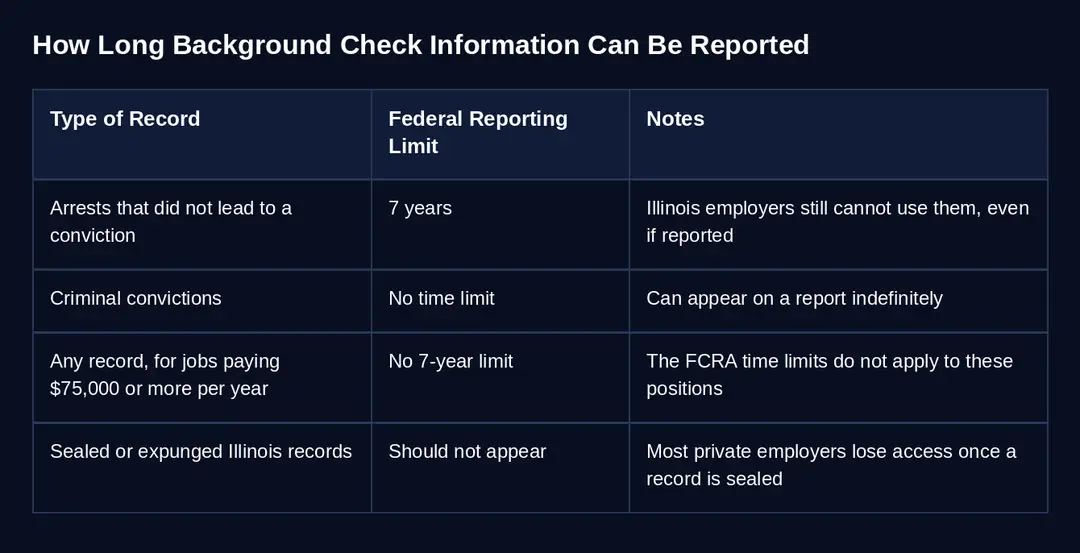
Background reports are not always accurate. Mixed-up names, outdated case outcomes, and duplicate entries happen more often than most people expect. The FCRA gives you the right to dispute errors, and the company generally must investigate within 30 days.
Illinois has built several layers of protection into its employment practices laws. Each one covers a different stage of the hiring process.
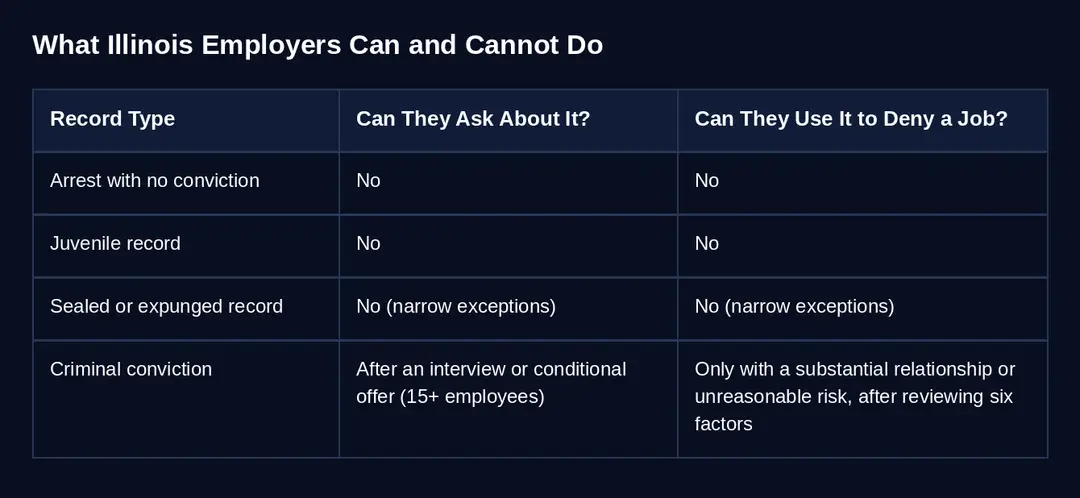
Under the Illinois Human Rights Act, an employer cannot ask about or use an arrest record to refuse to hire, fire, promote, or discipline you. That protection covers:
There are narrow exceptions. Employers that state or federal law requires to run fingerprint checks may see certain sealed felony convictions. An employer may also act on other evidence showing you actually engaged in the conduct behind the arrest.
Since 2021, Illinois has required employers to justify any decision based on a conviction. The employer must show either a substantial relationship between the offense and the job, or an unreasonable risk to safety or property.
To make that call, the employer must weigh six factors:
This law covers nearly every employer in Illinois, including small businesses with a single employee. Blanket employment policies that reject everyone with a record do not fit this framework.
The Illinois Job Opportunities for Qualified Applicants Act, often called the “ban the box” law, applies to private employers with 15 or more employees. These employers cannot ask about criminal history on a job application.
Instead, they must wait until:
Some positions are exempt. Employers can ask earlier when federal or state law bars people with certain convictions from the job, or when the position requires a fidelity bond.
If you work or apply within Chicago city limits, the Chicago Human Rights Ordinance adds similar local protections. Applicants there can also file a complaint with the Chicago Commission on Human Relations.
Many people do not realize the hiring process has built-in checkpoints. If an employer wants to pull a conditional job offer over a conviction, here is how the process should unfold:
Use the response window. Letters of recommendation, proof of completed job training, steady employment history, and community service records can all help an employer see the full picture.
Some careers come with stricter rules because the state licenses the work or the job involves vulnerable people.
Nurses, pharmacists, real estate brokers, and many other professionals need occupational licenses from the Illinois Department of Financial and Professional Regulation (IDFPR). A conviction does not automatically disqualify an applicant.
IDFPR must decide whether the conviction directly relates to the profession and would prevent the person from doing the work effectively. It must also weigh mitigating factors such as time since the offense, rehabilitation, and work history. If you already hold a license, a new criminal case can trigger a separate disciplinary process, which makes professional license defense an important part of protecting your career.
Under the Health Care Worker Background Check Act, certain convictions bar people from direct-care positions in hospitals, nursing homes, and similar settings. Workers can apply to the Illinois Department of Public Health for a waiver, but waivers are not granted automatically. Our guide on hospital jobs with a misdemeanor in Illinois covers this process in more detail.
Delivery drivers, rideshare drivers, and truckers face driving record reviews on top of criminal background checks. For commercial drivers, the stakes are even higher, as the next section explains.

A DUI is one of the most common reasons Illinois residents end up with a criminal record. It is also one of the hardest records to move past.
Here is why:
Because a DUI record is permanent, the strongest time to protect your career is while the case is still open. A first DUI charge is a criminal case with long-term consequences, not a simple traffic matter.
Clearing a record can reopen employment opportunities. Illinois offers two main tools, sometimes called record restriction in other states:
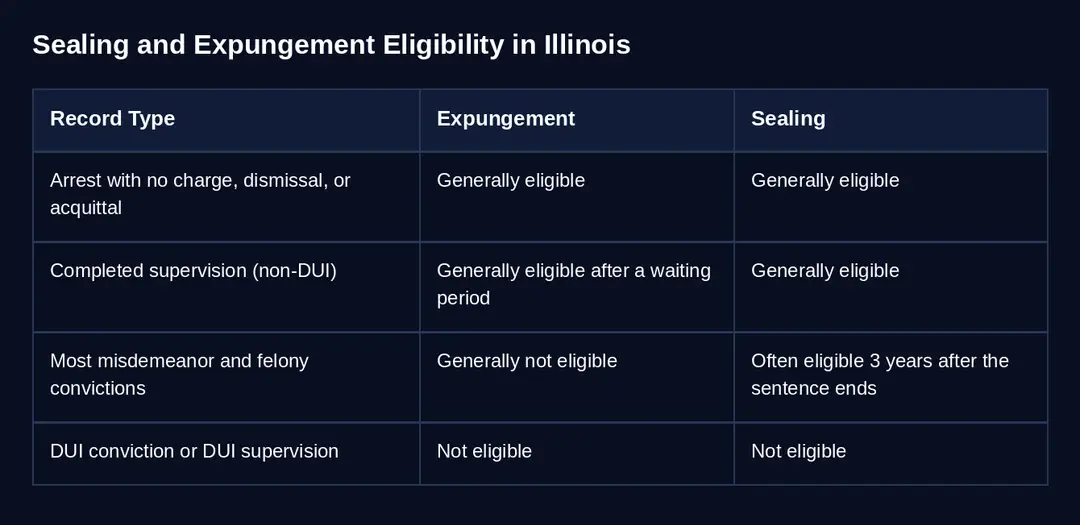
Once a record is sealed, most private employers can no longer see it, and Illinois law bars them from asking about it.
Illinois signed the Clean Slate Act into law in January 2026. Beginning January 1, 2029, the state will automatically seal many eligible conviction records after a waiting period, with no petition required. Until then, you must still file a petition to seal.
For records that cannot be sealed, an Illinois court may issue a certificate of good conduct to people who show rehabilitation. The certificate does not erase the record. It can, however, lift certain employment and licensing barriers and gives employers some protection when they hire you.
Legal protections matter, but how you present yourself matters too. These steps can help:
If you believe an employer crossed the line into employment discrimination or workplace discrimination, document everything and speak with an employment attorney about filing a discrimination charge. Federal guidance has also long warned that blanket bans can lead to racial discrimination through what courts call disparate impact, although that federal guidance is currently under review.

Pleading guilty creates a conviction, and some convictions, including every DUI, stay on your record permanently. Before you make that decision, find out whether diversion programs or other options could apply to your case.
Every attorney at Ktenas Law is a former prosecutor, including Alex Ktenas, a former Cook County Assistant State’s Attorney. Call (312) 800-1626 or reserve a priority Free Case Review with our criminal defense lawyer team to protect your record and your career.
No. Illinois law bars employers from asking about or using arrests without a conviction, along with juvenile, sealed, and expunged records.
Employers with 15 or more employees must wait until they select you for an interview or make a conditional job offer.
Background check companies can report convictions with no time limit. Arrests without a conviction generally drop off after seven years.
No. Illinois does not allow a DUI conviction or DUI supervision to be sealed or expunged.
Not automatically. IDFPR must find that the conviction directly relates to the profession before denying a license.